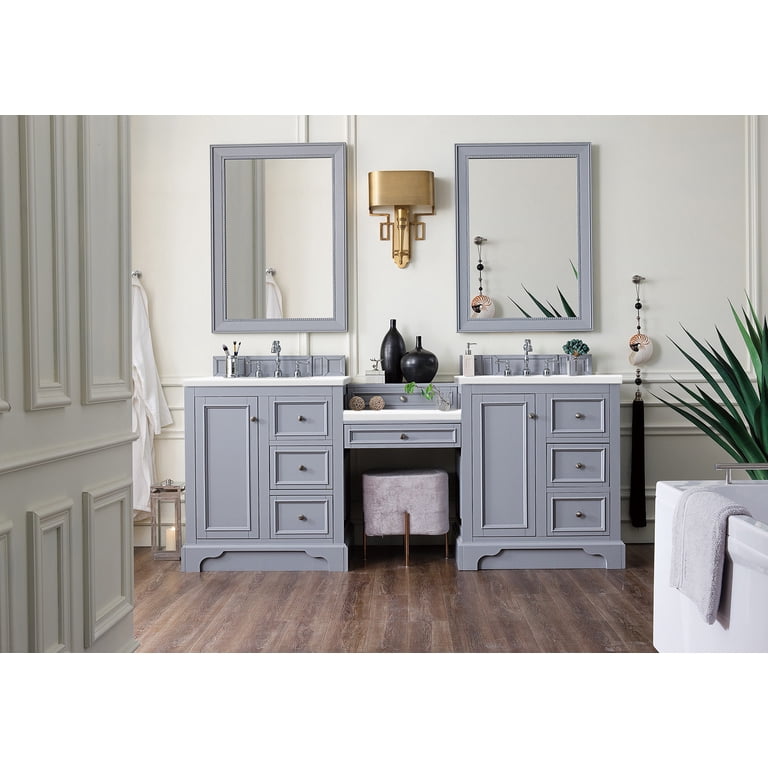
How to Choose a Bathroom Vanity
Choosing a bathroom vanity is one of the most consequential decisions in a bathroom renovation. The vanity typically accounts for a third or more of the room's visual weight, provides the majority of the storage, and determines how comfortable the daily routine feels for everyone who uses the space. Get it right and you will enjoy the bathroom more every single day for the next ten or twenty years. Get it wrong and you will know it immediately. This guide walks through every variable that matters — size, configuration, style, materials, and installation — so you can make a confident choice the first time.
Step 1: Measure First, Shop Second
Before looking at any vanity, take accurate measurements of your bathroom. You need: the total width of the wall where the vanity will go, the distance from the vanity wall to any opposing wall or fixture, the location of existing plumbing (drain and supply lines), and the ceiling height. Building codes require a minimum of 15 inches from the center of any sink drain to a side wall or partition, though 18 to 21 inches feels far more comfortable in practice. Allow at least 21 inches of clear floor space in front of the vanity — 30 inches if budget and space allow. Also measure all delivery pathways: the front door, any hallways, and the bathroom door. A vanity that cannot reach its destination is a costly mistake.
Step 2: Choose Your Configuration
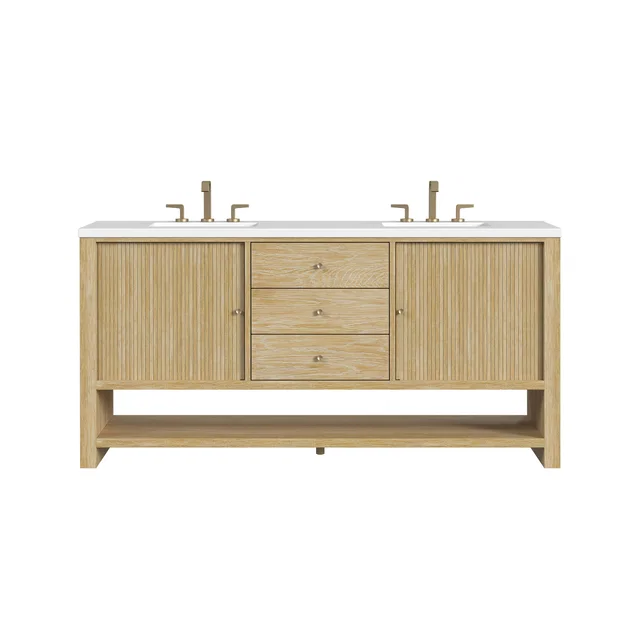
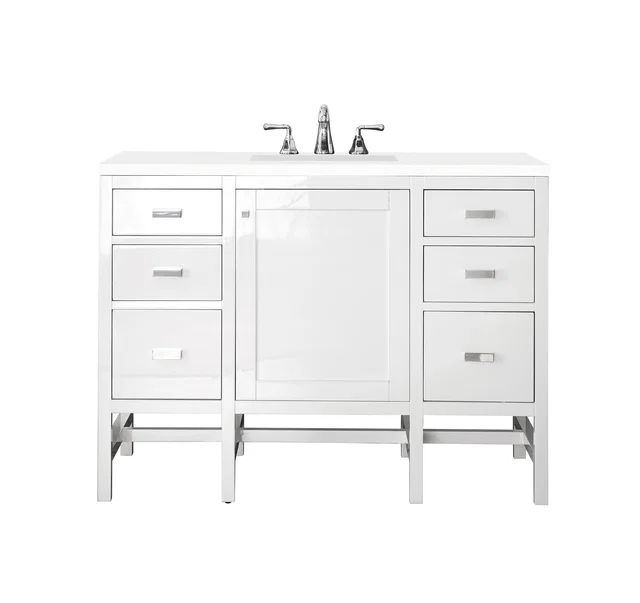
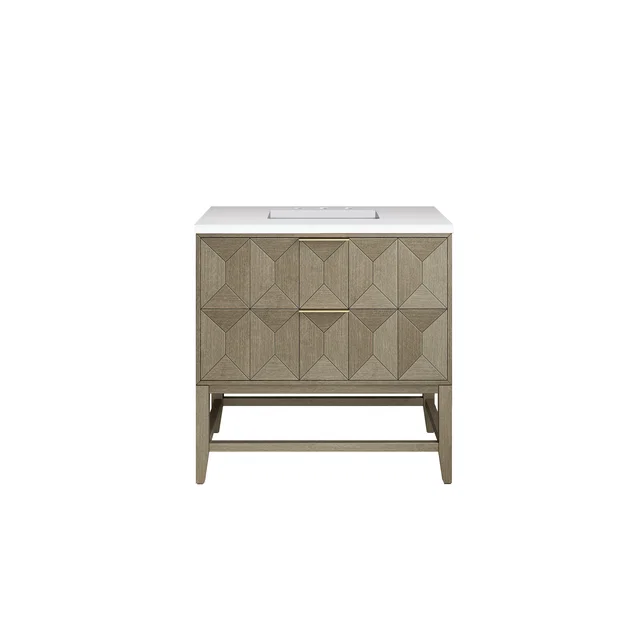
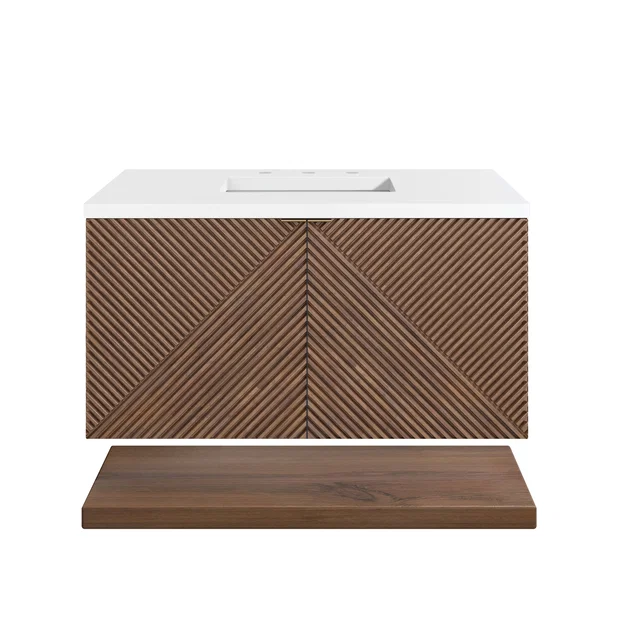
Single-sink vanities range from 18 inches to 60 inches wide and suit most powder rooms, guest bathrooms, and primary bathrooms used by one person. Double-sink vanities typically start at 48 inches and offer the most comfortable shared-bathroom experience. Freestanding vanities — which rest on legs or a full base touching the floor — are the most common type and offer the most internal storage. Floating (wall-mounted) vanities leave clear floor space beneath, making any bathroom feel more open; they require structural wall backing and professional installation in most cases. Corner vanities are designed for awkward layouts where a standard vanity would obstruct traffic flow or waste space.
Browse our full collection of bathroom vanities in every size and style — with free shipping on every order and quality you can see.
Step 3: Select the Right Style and Finish
The vanity style should reflect the overall direction of the bathroom and, ideally, the broader aesthetic of the home. Shaker-style vanities with recessed panel doors are the most versatile — they work in farmhouse, transitional, and traditional bathrooms equally well. Flat-front or slab-front vanities suit modern and contemporary bathrooms. Raised-panel vanities with decorative molding suit formal traditional spaces. For finish, white and off-white painted vanities are the most popular choice nationally because they work with nearly any tile and hardware combination and are easy to refresh. Wood-toned vanities — in natural oak, walnut, or espresso — add warmth and visual richness that painted finishes cannot replicate.
Step 4: Choose Materials That Last
Vanity quality varies significantly, and the differences become visible over time. Solid wood or plywood cabinet boxes are far more durable than particleboard, particularly in the damp environment of a bathroom. Dovetail drawer joints and soft-close hardware indicate construction quality that holds up to daily use for decades. For countertops, engineered quartz offers the best combination of beauty, durability, and low maintenance — it is non-porous, scratch-resistant, and available in a wide range of colors. Natural marble is beautiful but requires sealing and more careful maintenance. Whatever your budget, prioritize the construction of the cabinet box and the quality of the drawer hardware over cosmetic features — those are what you will live with every day.
Completing the Picture
Once you have your vanity, select a mirror, faucet, and lighting that work together as a cohesive system. The faucet finish anchors your hardware palette — once you choose brushed gold, matte black, or brushed nickel, all other metal finishes in the room should coordinate. A mirror sized to the vanity width (or slightly narrower) creates the most balanced look. For lighting, sconces on either side of the mirror provide more flattering, even illumination than an overhead fixture alone. Explore our mirror collection, faucet selection, and the Bundle Builder to create a complete, coordinated bathroom package.
Featured Bathroom Vanities
 Sale
Sale
 Sale
Sale
 Sale
Sale
 Sale
Sale
More Guides You May Like