Floating Bathroom Vanity Ideas

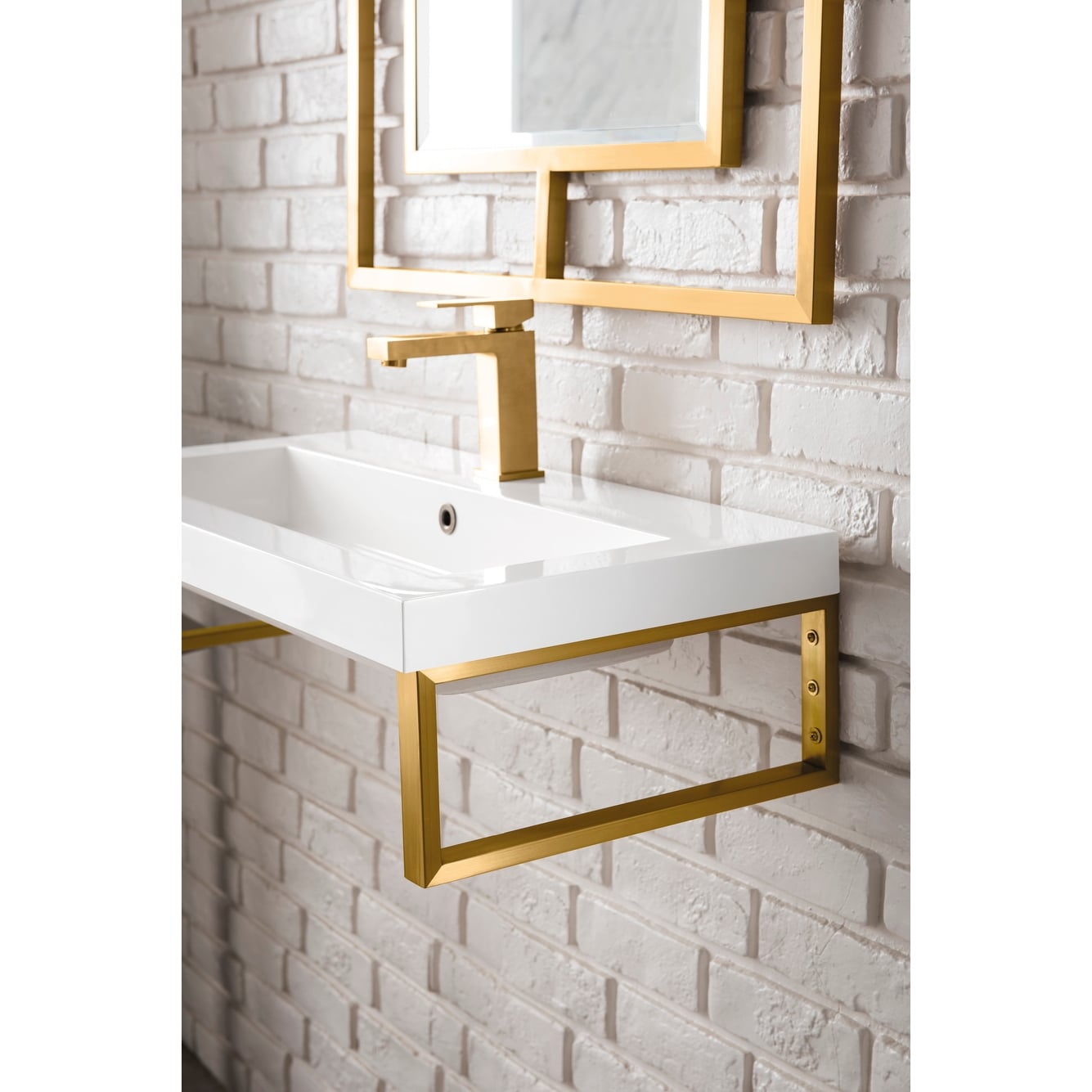
A floating vanity hangs off the wall with nothing underneath it. You will also see them sold as wall-hung or wall-mounted, which are the same thing, and the reason people want one is almost always the same: showing the floor makes a small bathroom look bigger than it is.
That effect is real, and so are the trade-offs. What most guides miss is that the choice is not always made for you at the factory. Some vanities are built to float and nothing else. Many more can be installed either way, and the decision happens on site, with your installer, on the day. We have split the twenty-eight cabinets below along exactly that line.
Before you fall in love with one
A floating vanity transfers its entire weight, plus the weight of a stone top, plus a sink full of water, into your wall. That load has to land on blocking or studs. If your bathroom wall is standard drywall over 16-inch centers and the vanity's mounting cleat does not line up with them, someone has to open the wall and add backing before anything gets hung. Budget for that conversation before you order, not after.
The second thing to settle early is plumbing height. On a floor-standing vanity the supply lines and drain hide inside the cabinet and nobody sees where they enter the wall. On a floating vanity the wall below the cabinet is fully visible, so the rough-in has to come through behind the cabinet body. If your existing plumbing enters low, it will be exposed, and that is the most common way a floating install ends up looking unfinished.
Built to float: two collections
These two are wall-mount only. There are no legs, no base, and no floor-standing version. If you want this particular look, these are the cabinets designed around it.
1. Allamari 36" Single Vanity Cabinet, Dune Mist
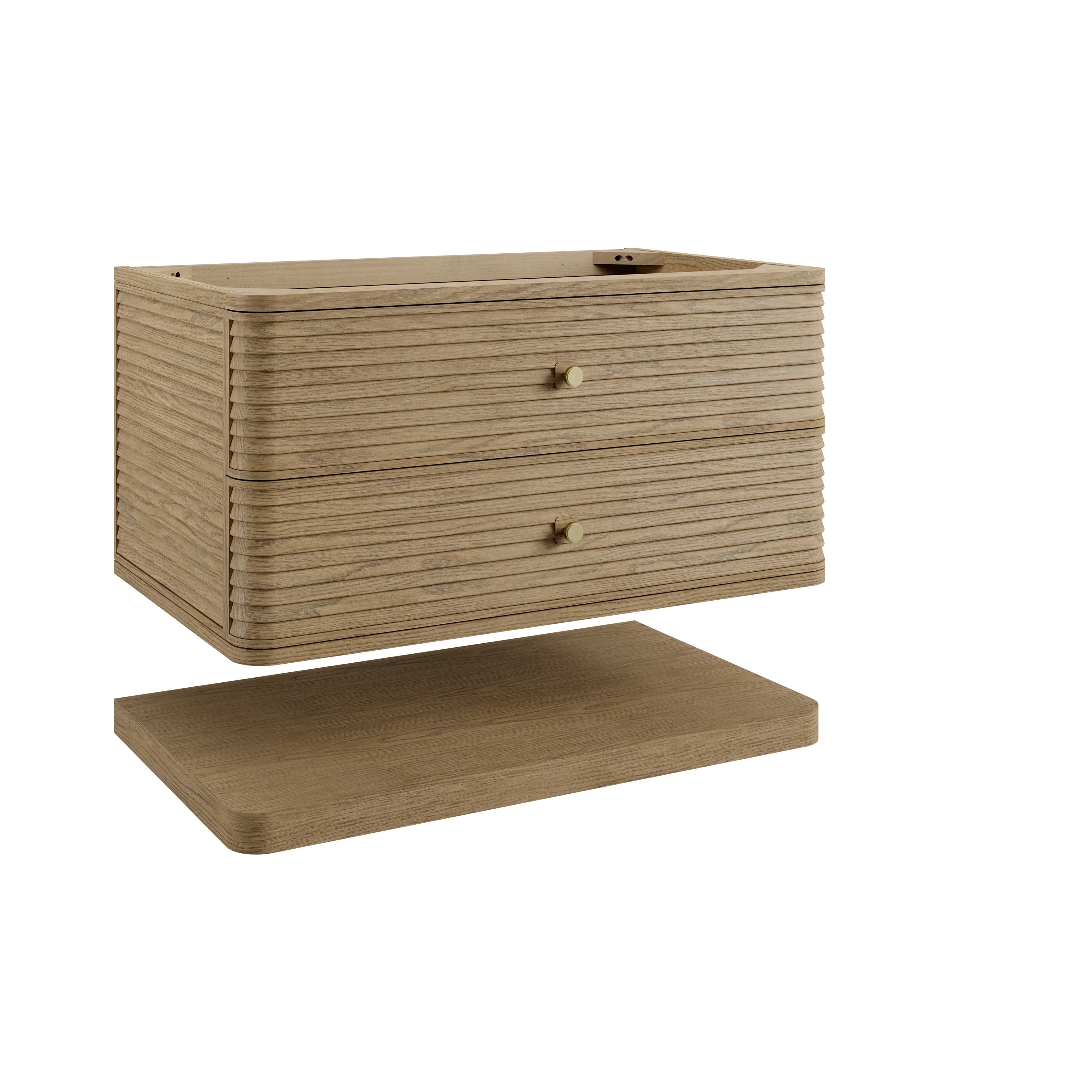
Thirty-six inches is where the floating effect pays off hardest. In a powder room, the strip of visible tile under the cabinet does more for the sense of space than any paint color would. Dune Mist is the pale option and recedes into a light wall, so the cabinet reads as part of the room rather than an object in it.
2. Allamari 36" Single Vanity Cabinet, Sable
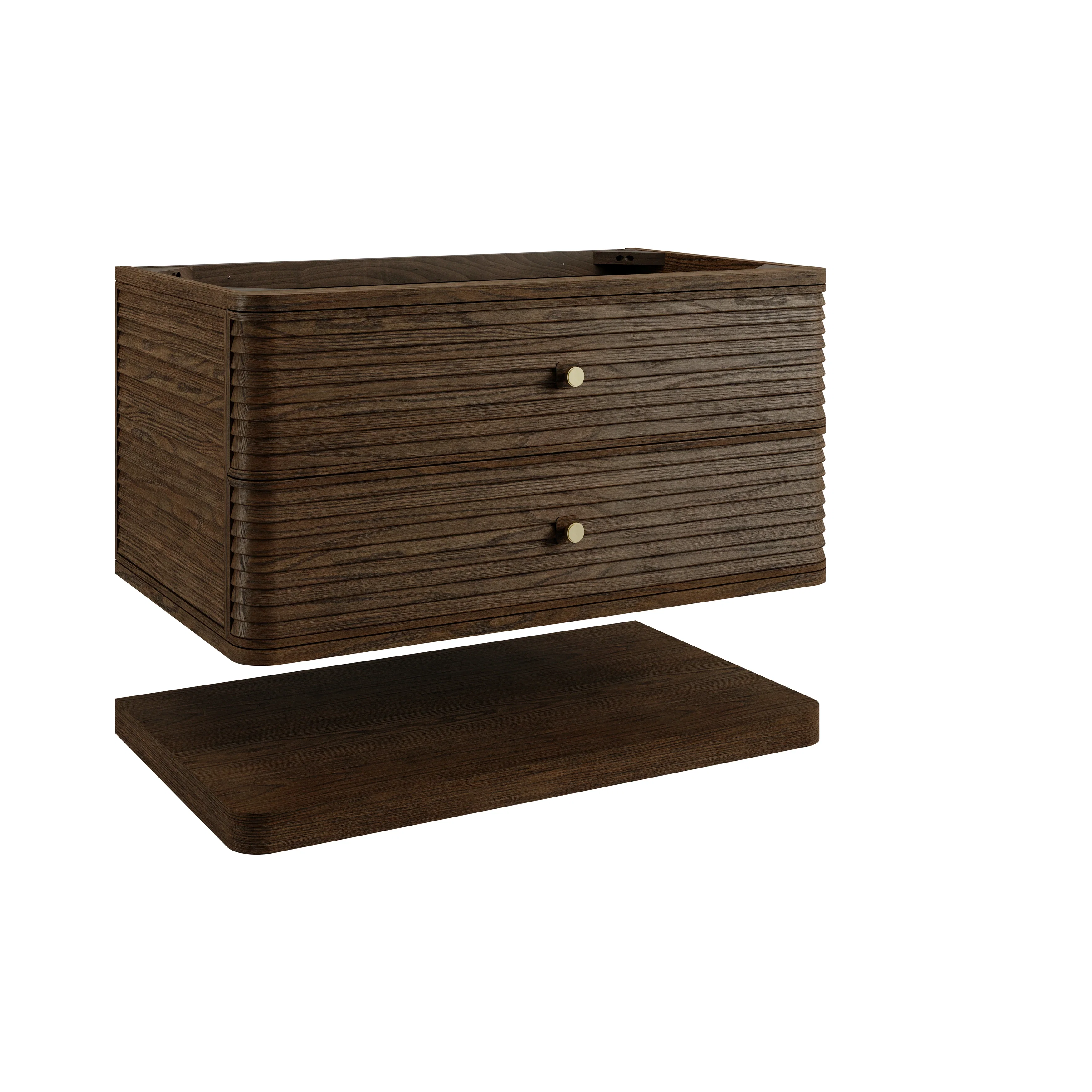
The same 36-inch body in the dark finish, and the comparison is instructive. Sable sits forward and reads as a deliberate object, where Dune Mist disappears. Neither is better. They solve different rooms.
3. Allamari 48" Single Vanity Cabinet, Dune Mist
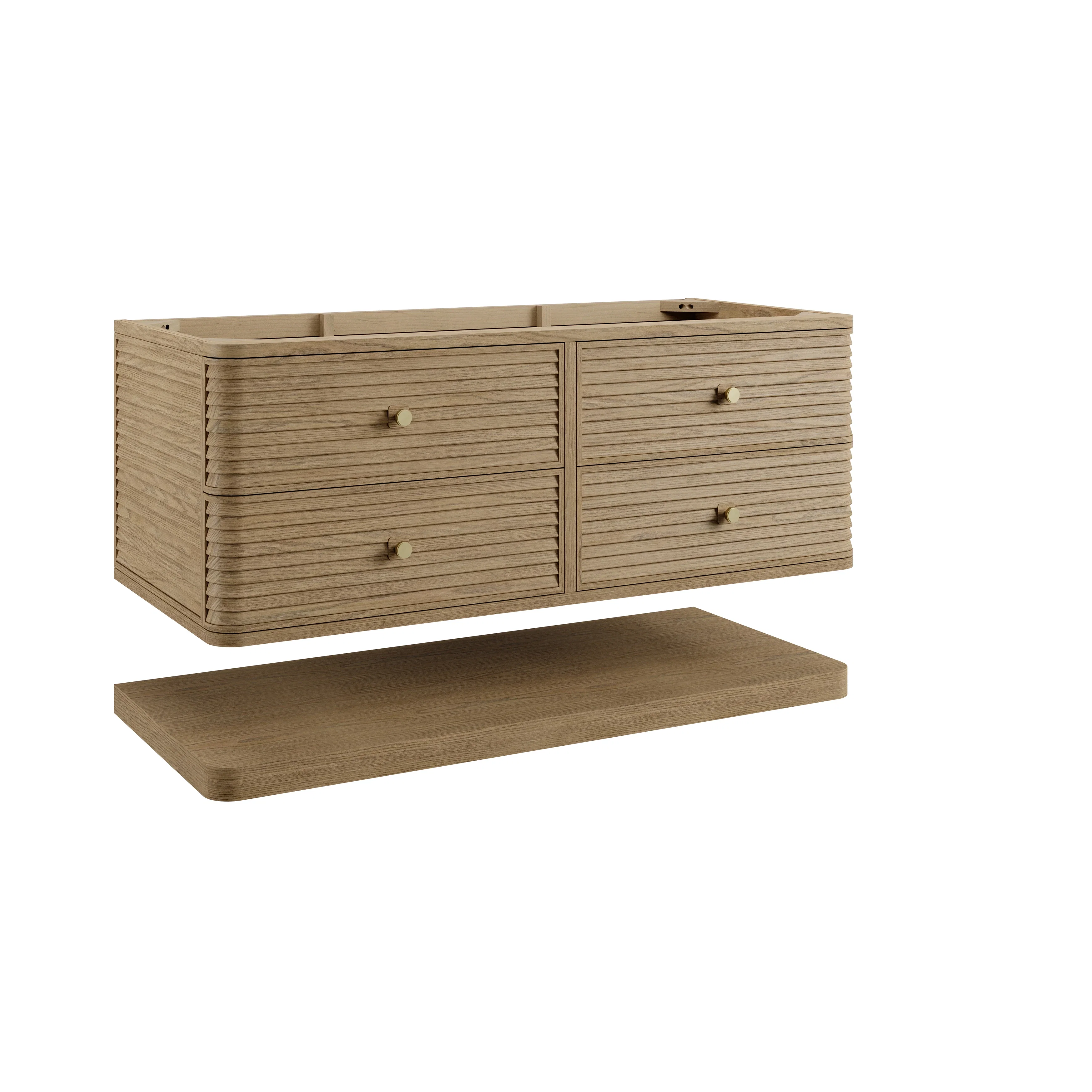
Forty-eight inches with a single sink is the most practical floating layout we sell. Full basin, roughly two feet of clear counter, and light enough that standard blocking handles it without an argument. Pale finishes also show less dust on the underside, which you can actually see on a floating cabinet.
4. Allamari 48" Single Vanity Cabinet, Sable
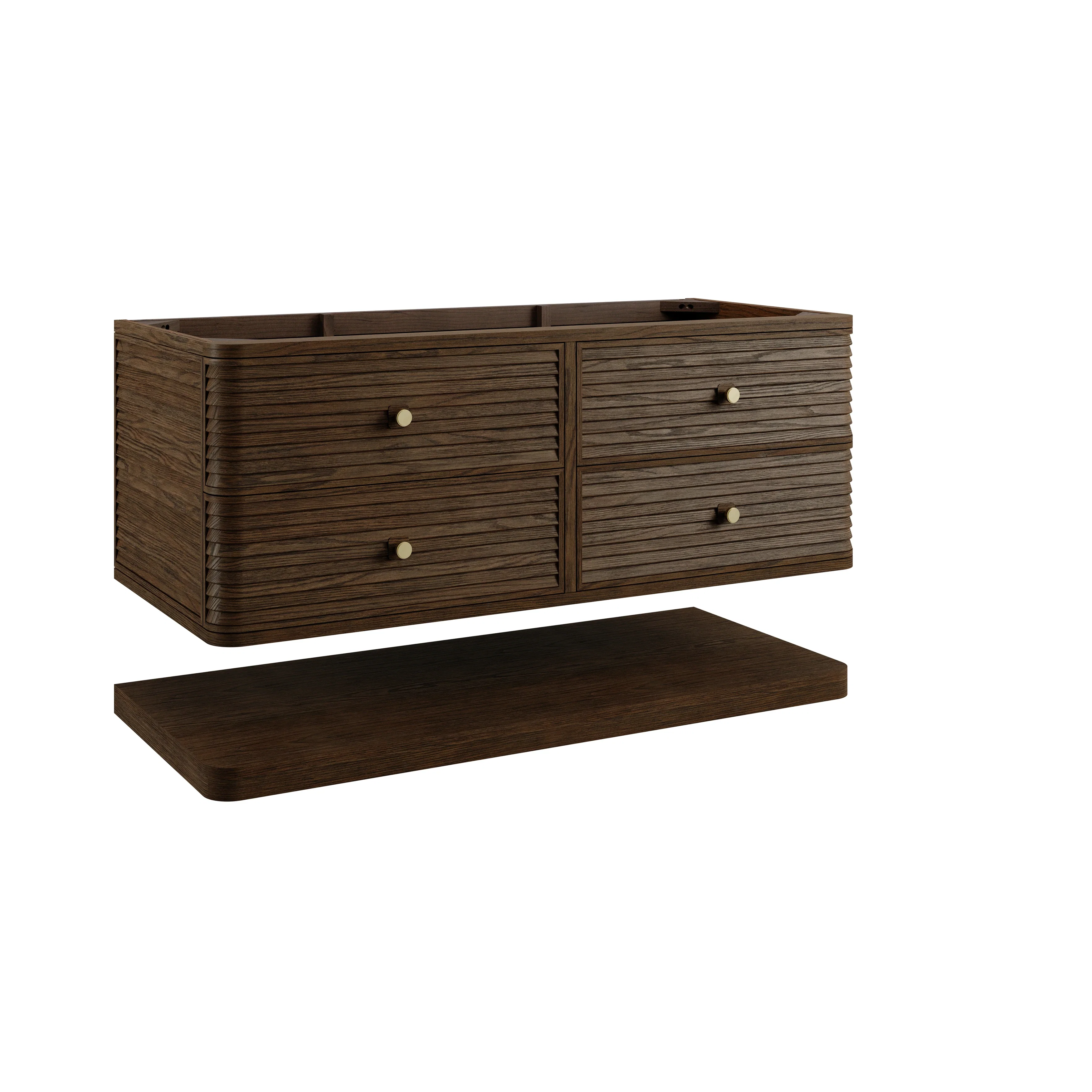
Sable at 48 inches is the configuration most people picture when they search for a floating vanity: dark, horizontal, floor running underneath. Check your lighting first, because a dark cabinet in a dim room reads heavy rather than dramatic.
5. Allamari 72" Double Vanity Cabinet, Dune Mist
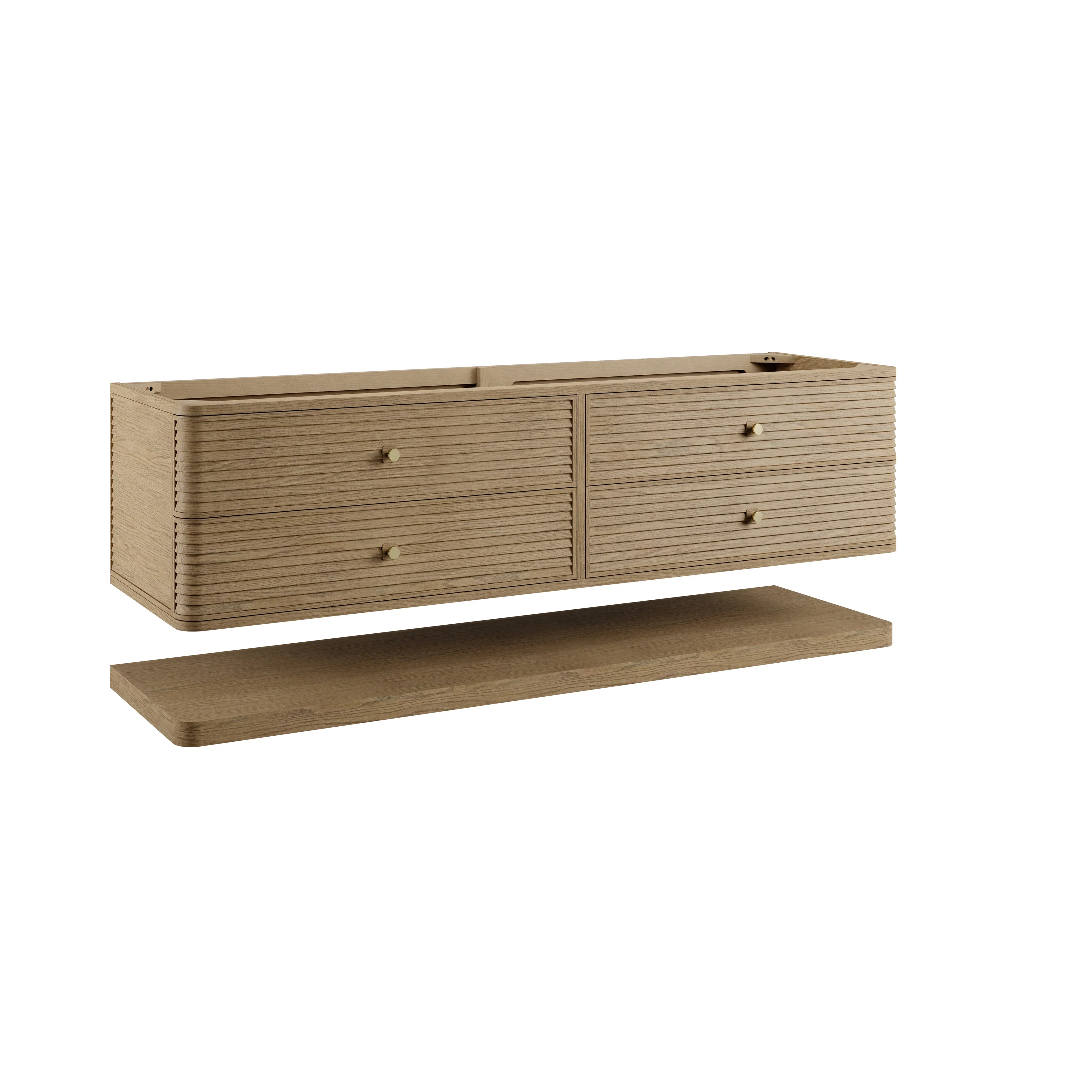
Six feet of cabinet with daylight underneath is the full expression of the look. At this width the pale finish is the easier one to live with, because a six-foot dark slab floating off a wall can dominate a room that is not large enough to absorb it.
6. Allamari 72" Double Vanity Cabinet, Sable
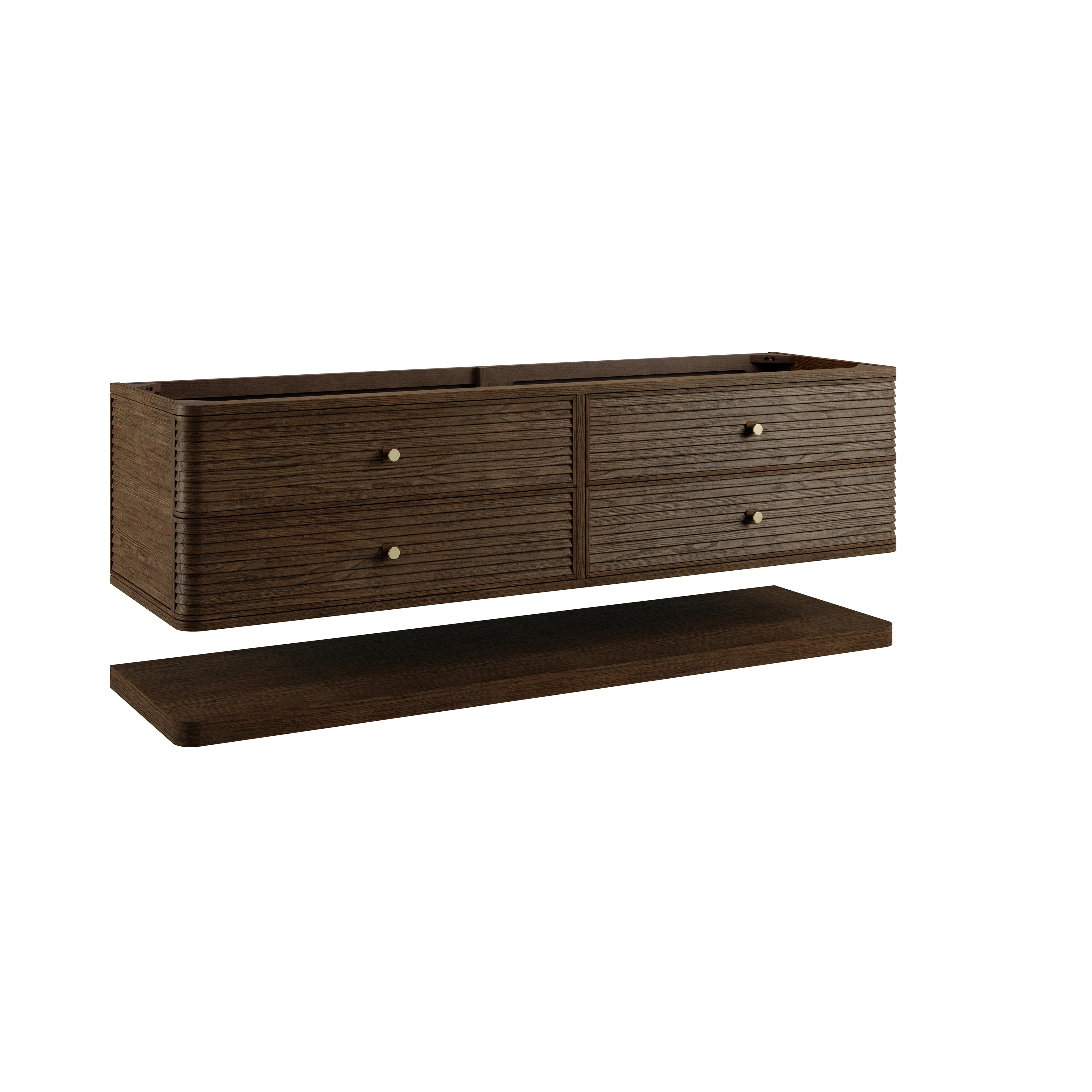
The most demanding install in this list and the most striking result. Before ordering a 72-inch floating double, have your installer confirm there is blocking where the mounting cleat lands. This is not a cabinet to hang on hope.
7. Marcello 36" Single Vanity Cabinet, Chestnut
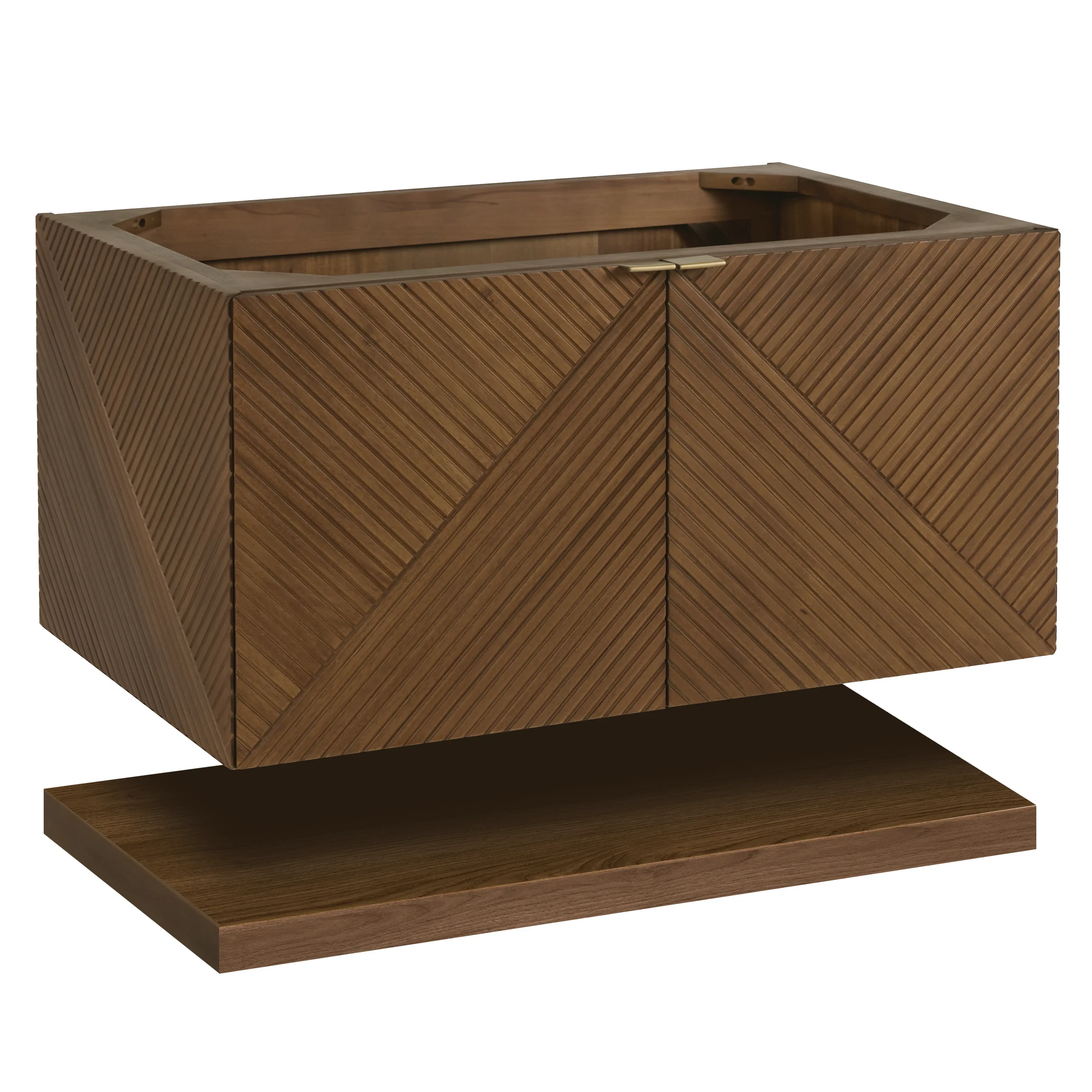
Marcello is the warm-wood alternative to Allamari's cooler finishes. Chestnut is a mid-brown with visible grain, which softens a piece that is otherwise strictly geometric. In a bathroom with white tile and brass fixtures, this is what stops the room feeling clinical.
8. Marcello 48" Single Vanity, Chestnut
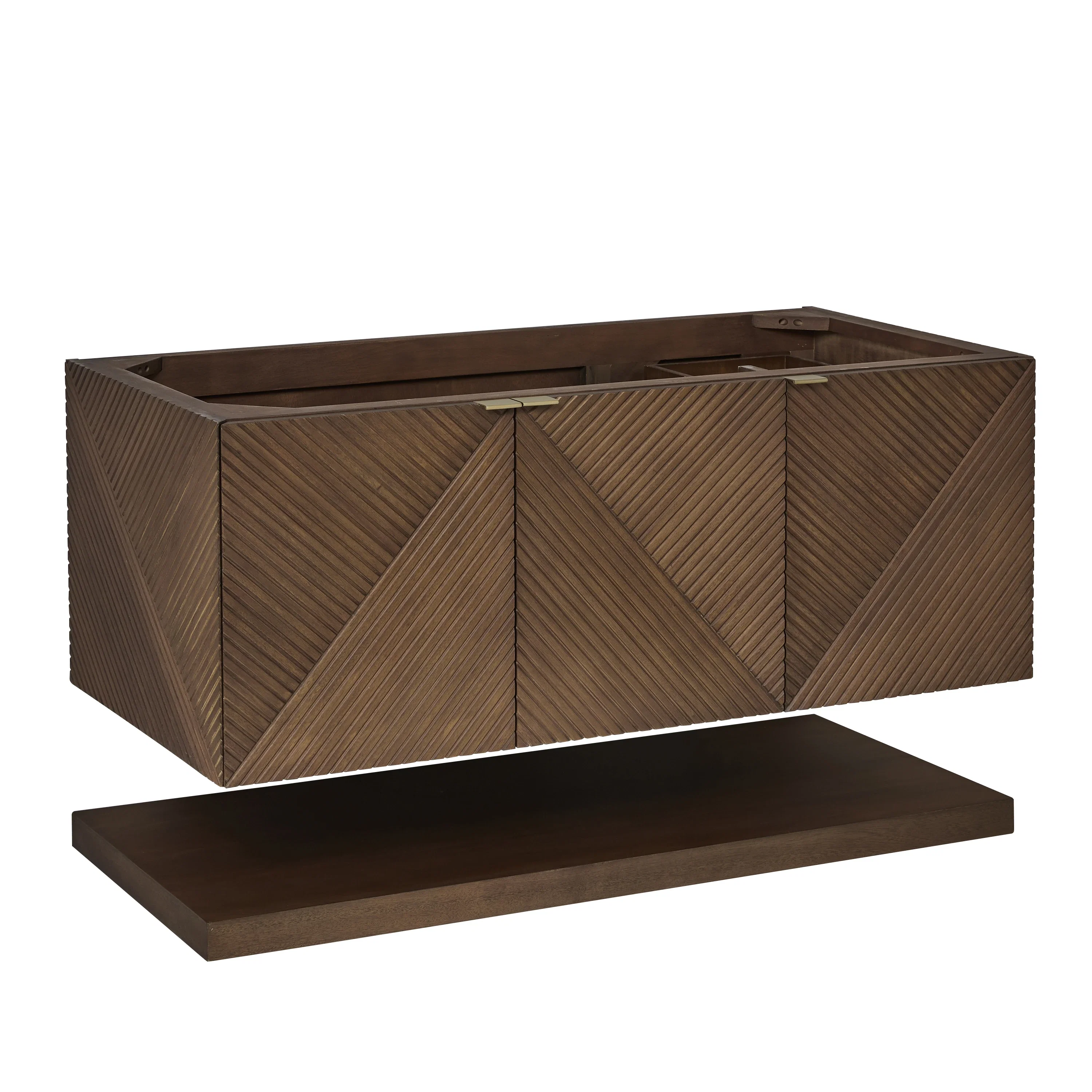
Forty-eight inches of chestnut is the sweet spot in this collection. Wide enough to be generous, warm enough not to read as a showroom piece, and at a width where the mounting is straightforward.
9. Marcello 72" Double Vanity Cabinet, Chestnut
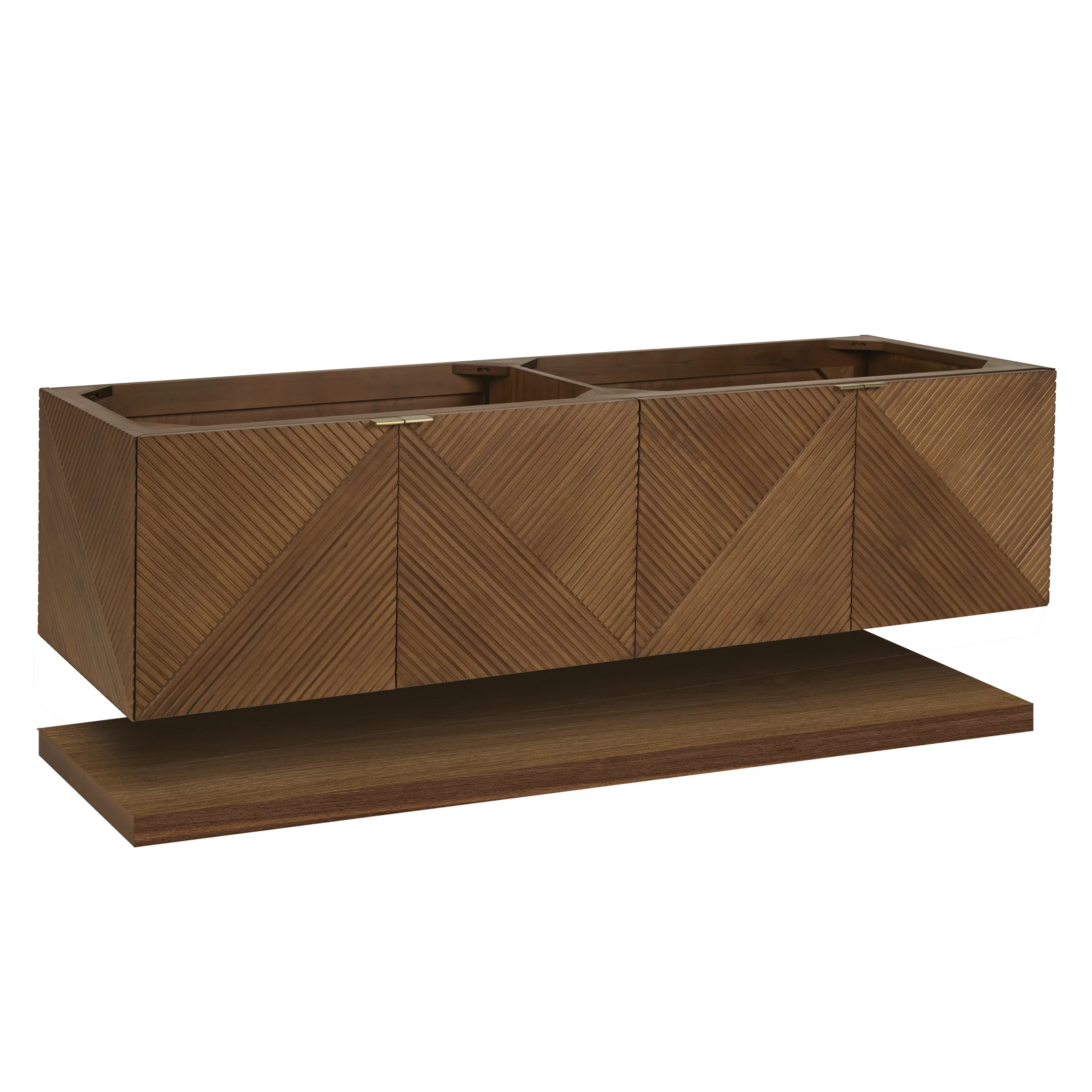
The largest floating cabinet we carry, in the warmest finish. Wood grain across six feet gives the eye something to follow, which is why this reads as less severe than a flat dark cabinet at the same width.
Your choice at install: seven more collections
This is the part worth knowing before you shop anywhere else. The seven collections below can be hung on the wall or stood on the floor, and the cabinet is the same either way. You are not choosing a product; you are choosing an installation.
That matters for three reasons. It doubles the number of cabinets available to you if floating is what you are after. It lets you change your mind late, because the decision is not locked in at the point of purchase. And in a few cases, noted below, the two installations genuinely produce different-looking rooms from identical parts.
Tell your installer which you want before they start. Floating requires the blocking and the plumbing height described above; floor-mounting requires neither.
10. Columbia 31.5" Single Vanity Cabinet, Ash Gray
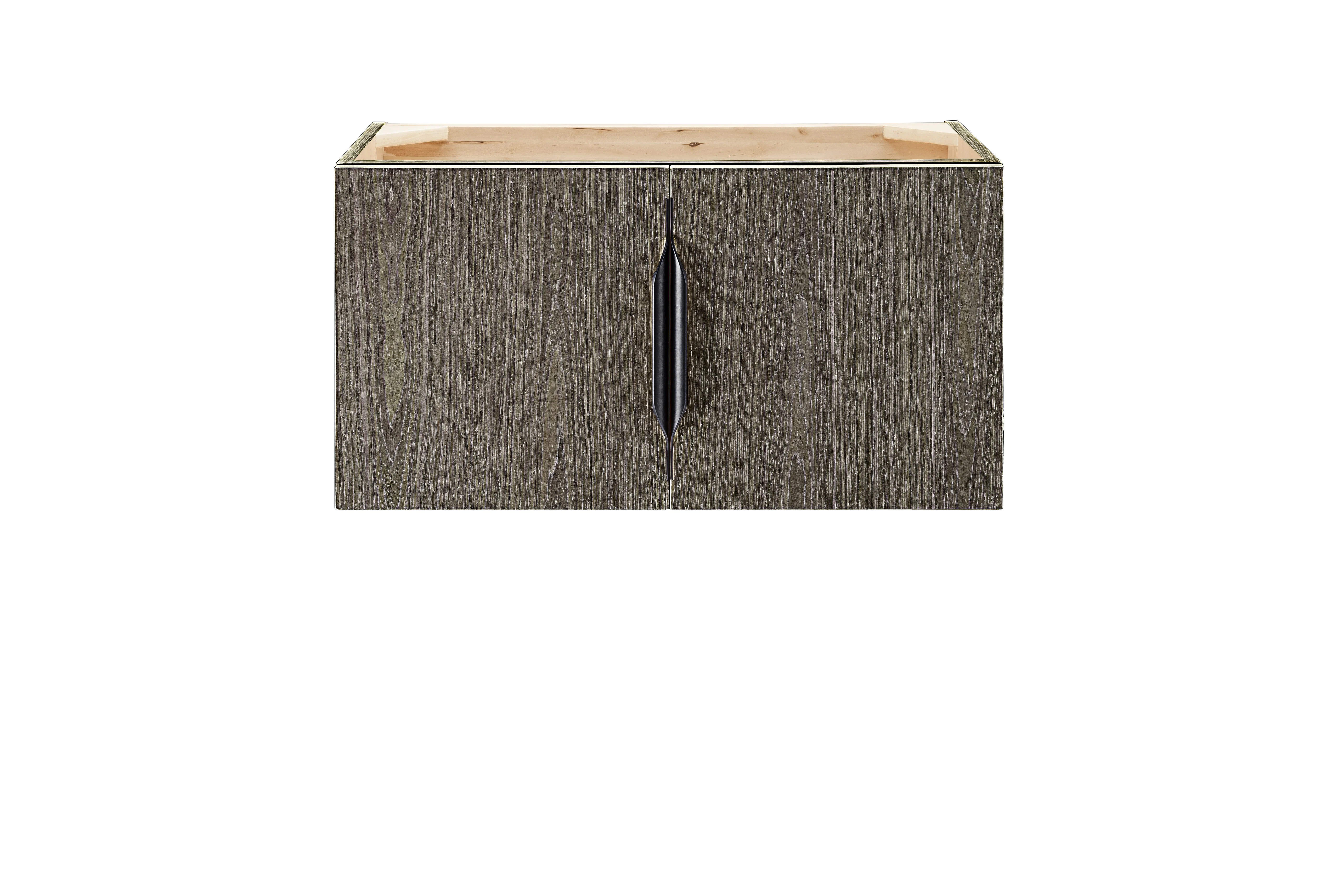
The 31.5-inch width is deliberate. It clears a 32-inch opening with tolerance to spare, which matters because bathroom walls are rarely plumb. Ash Gray is a cool neutral, so check it against your tile first. Warm cream tile against a cool gray cabinet reads as a mismatch rather than a neutral.
11. Columbia 48" Single Vanity Cabinet, Glossy White, No Hardware
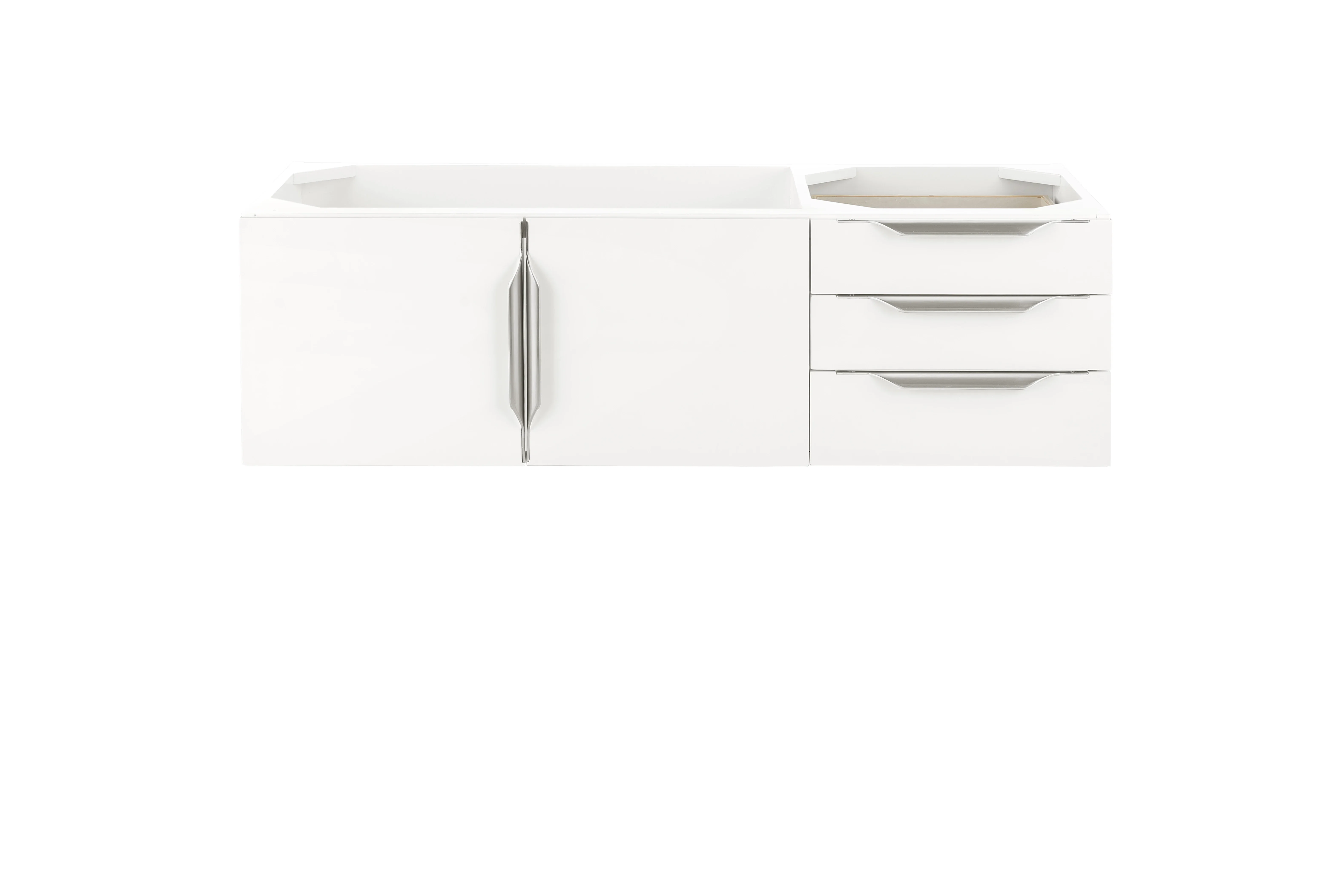
Columbia's doors are push-to-open, so no hardware interrupts the front. Hung on the wall, that uninterrupted face is the whole point. The caveat is children, because push latches get sticky faster than pulls do.
12. Columbia 72" Single Vanity, Glossy White
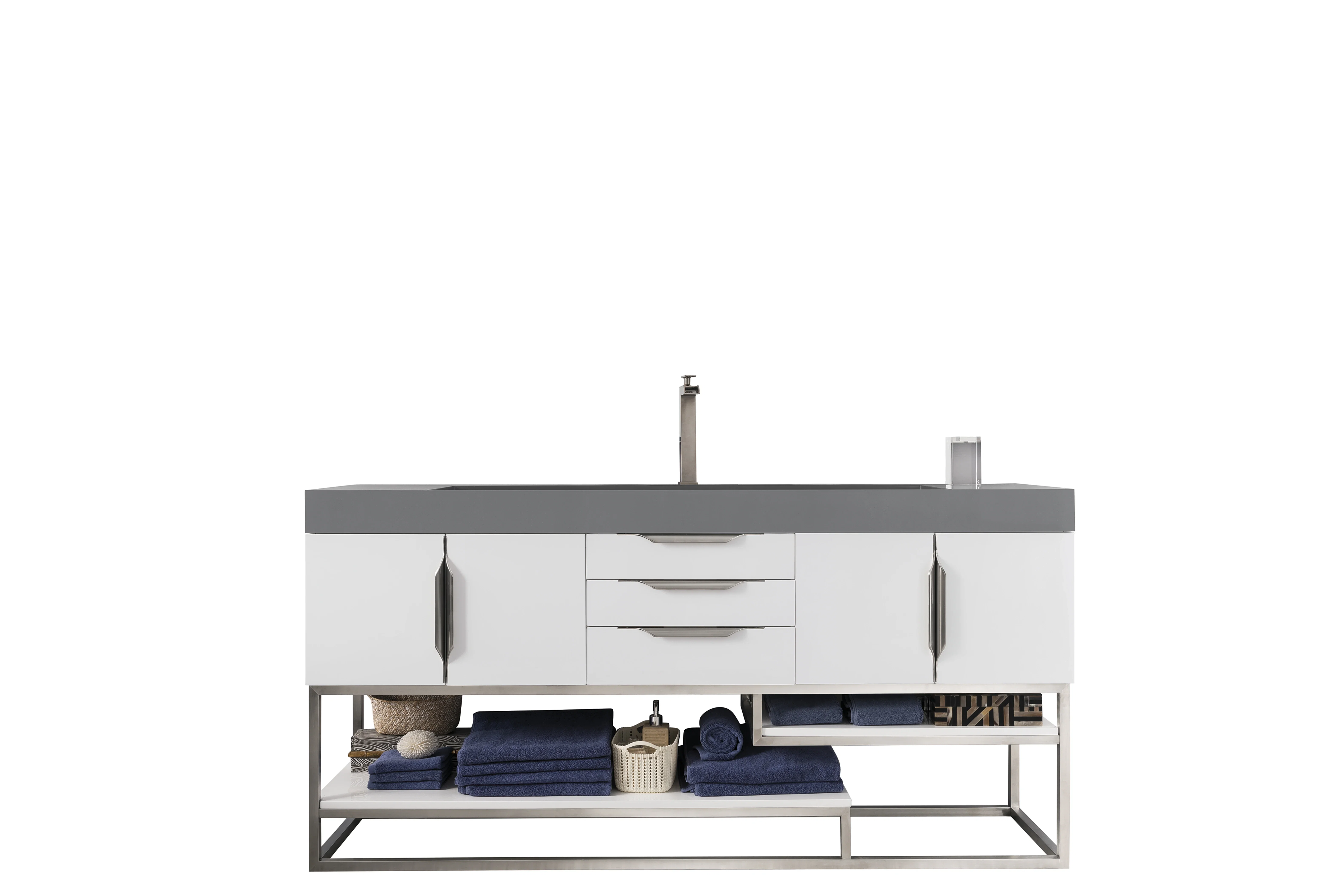
A 72-inch single is an underrated layout, and floating it makes the run of counter look longer still. One basin plus five feet of uninterrupted surface beats two sinks and two narrow margins for most people.
13. Chicago 30" Single Vanity, Glossy White
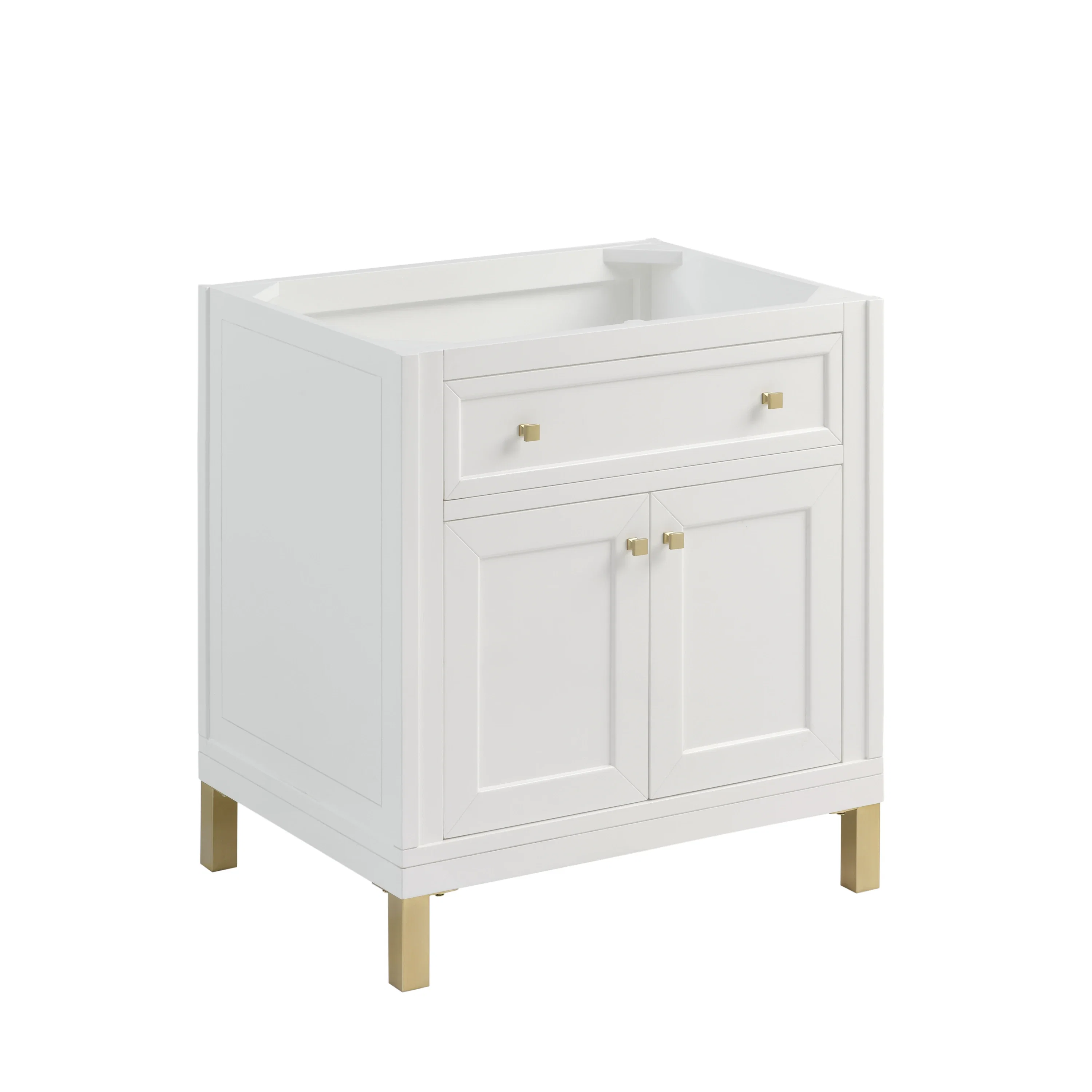
Flat slab doors and high-gloss lacquer, the most contemporary cabinet in this list and the one that most obviously wants to be floated. Gloss bounces light, useful in a windowless bathroom, and flat doors mean no grooves to collect toothpaste.
14. Chicago 48" Single Vanity, Smokey Celadon
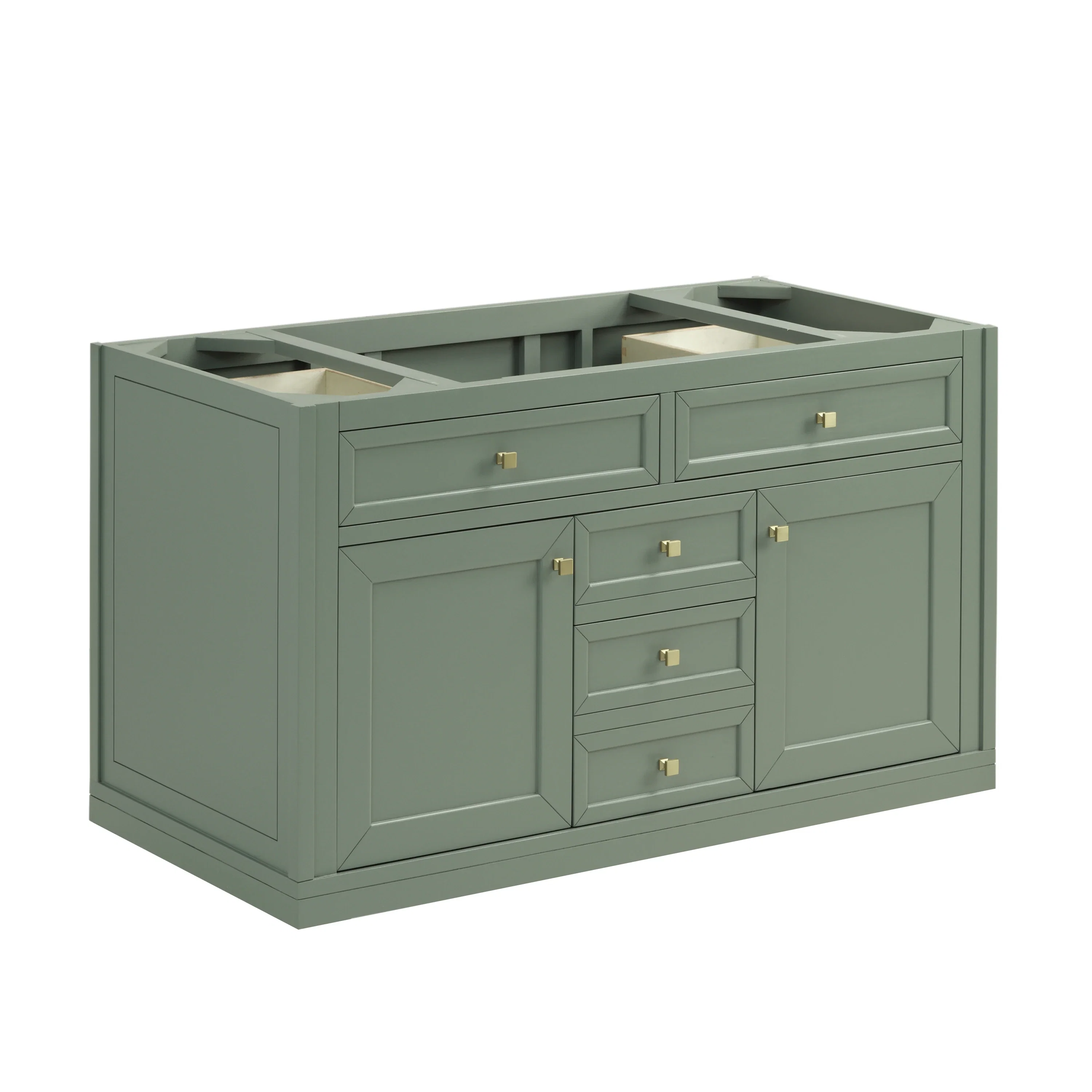
Smokey Celadon is a muted green-gray that behaves almost like a neutral. At 48 inches, floated, it is the piece here most likely to still look considered rather than trend-chasing in five years.
15. Chicago 72" Double Vanity, Walnut Whisper
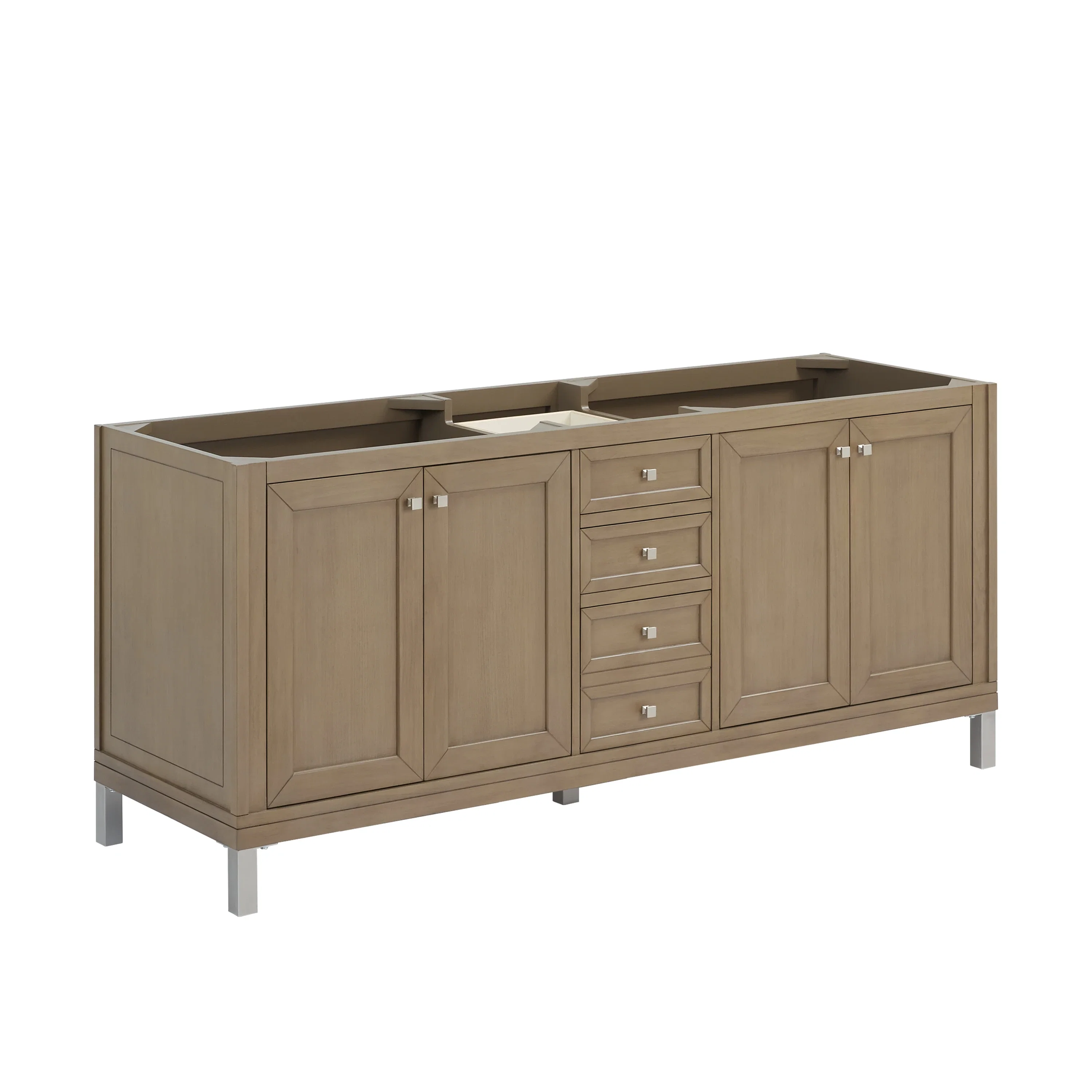
Walnut Whisper across six feet of flat slab is a lot of continuous wood tone. Floated, with floor showing underneath, it reads as one horizontal gesture. Floor-mounted it reads as a sideboard. Same cabinet, genuinely different room.
16. Amberly 30" Single Vanity Cabinet, Mid-Century Walnut
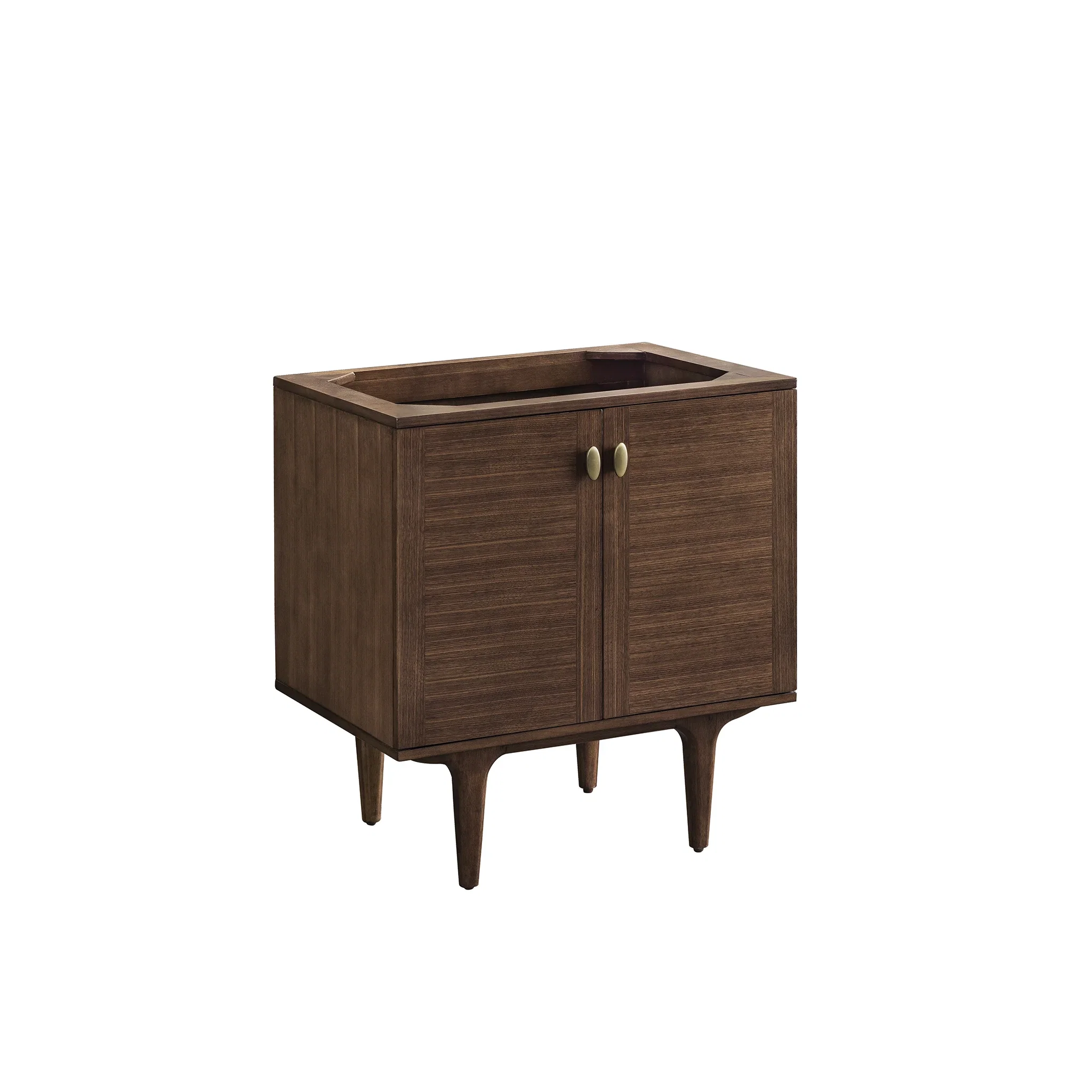
Amberly ships with tapered legs, and this is the clearest case in the list where the mount choice changes the design language. On its legs it is unmistakably mid-century. On the wall it becomes minimalist. Pick whichever matches the rest of your house.
17. Amberly 48" Single Vanity Cabinet, Mid-Century Walnut
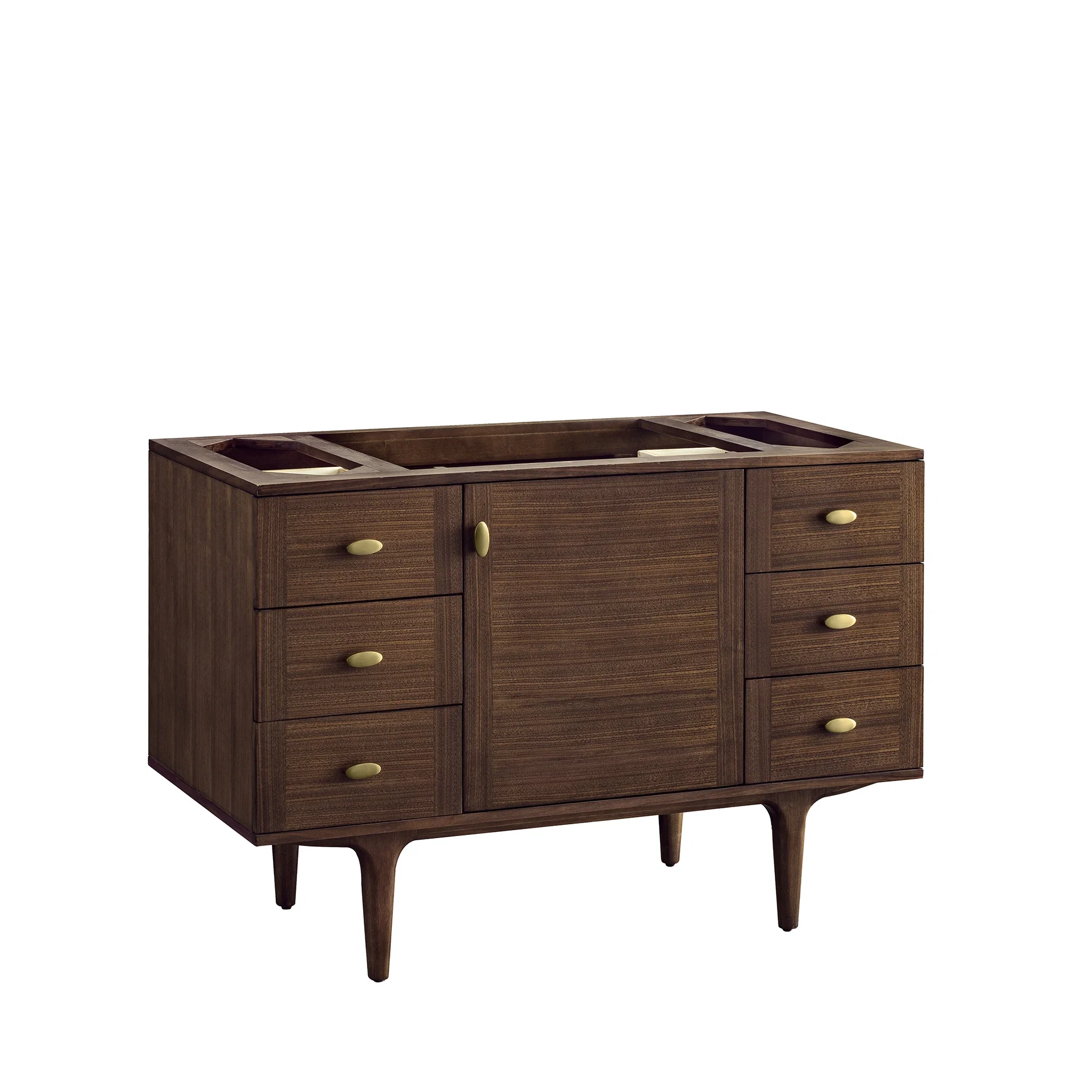
Mid-Century Walnut at 48 inches is the most forgiving size in this collection. It wants brass or matte black pulls and will look wrong with chrome, whichever way you mount it.
18. Amberly 72" Double Vanity Cabinet, Mid-Century Walnut
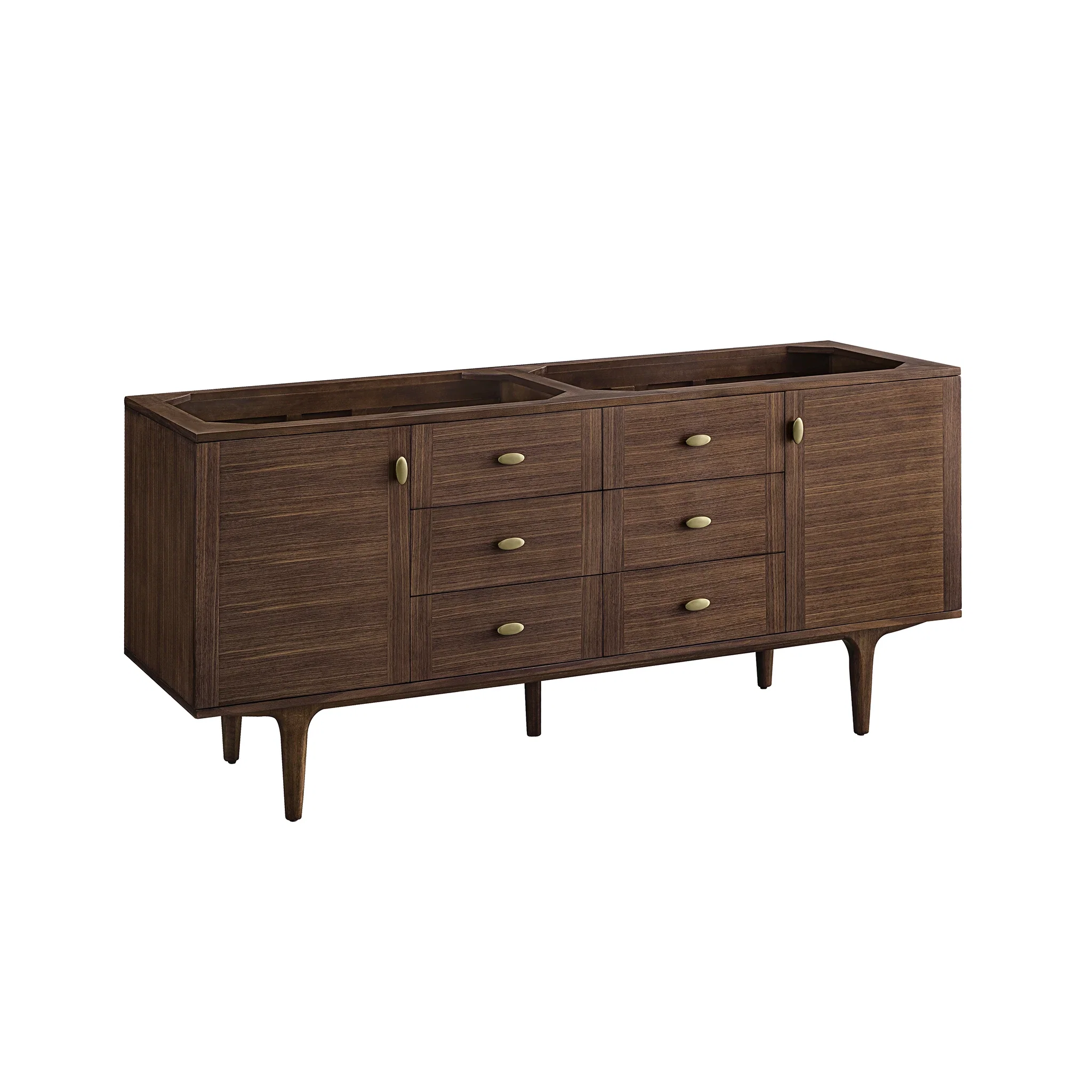
At 72 inches the walnut grain becomes the feature. Floating this one costs you the tapered legs that give the collection its character, so this is the width where we would stand it on the floor and keep them.
19. Laurent 30" Single Vanity Cabinet, Honey Oak
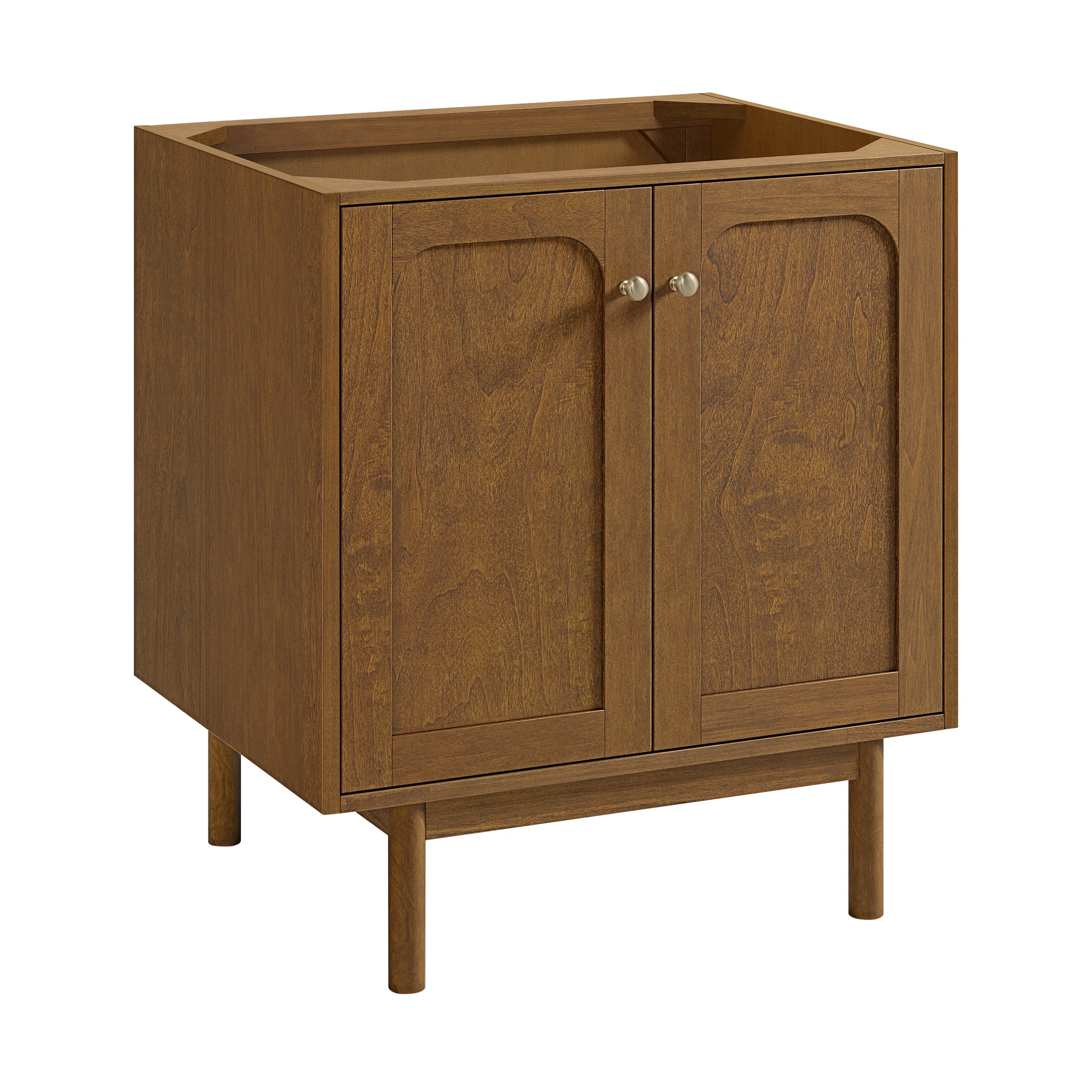
Laurent also comes on visible legs, which do the same space-opening job as floating it. Either way you see floor continue under the cabinet. Honey Oak is the warmest wood tone we stock, and at 30 inches it is the least intimidating way to use it.
20. Laurent 48" Single Vanity Cabinet, Honey Oak
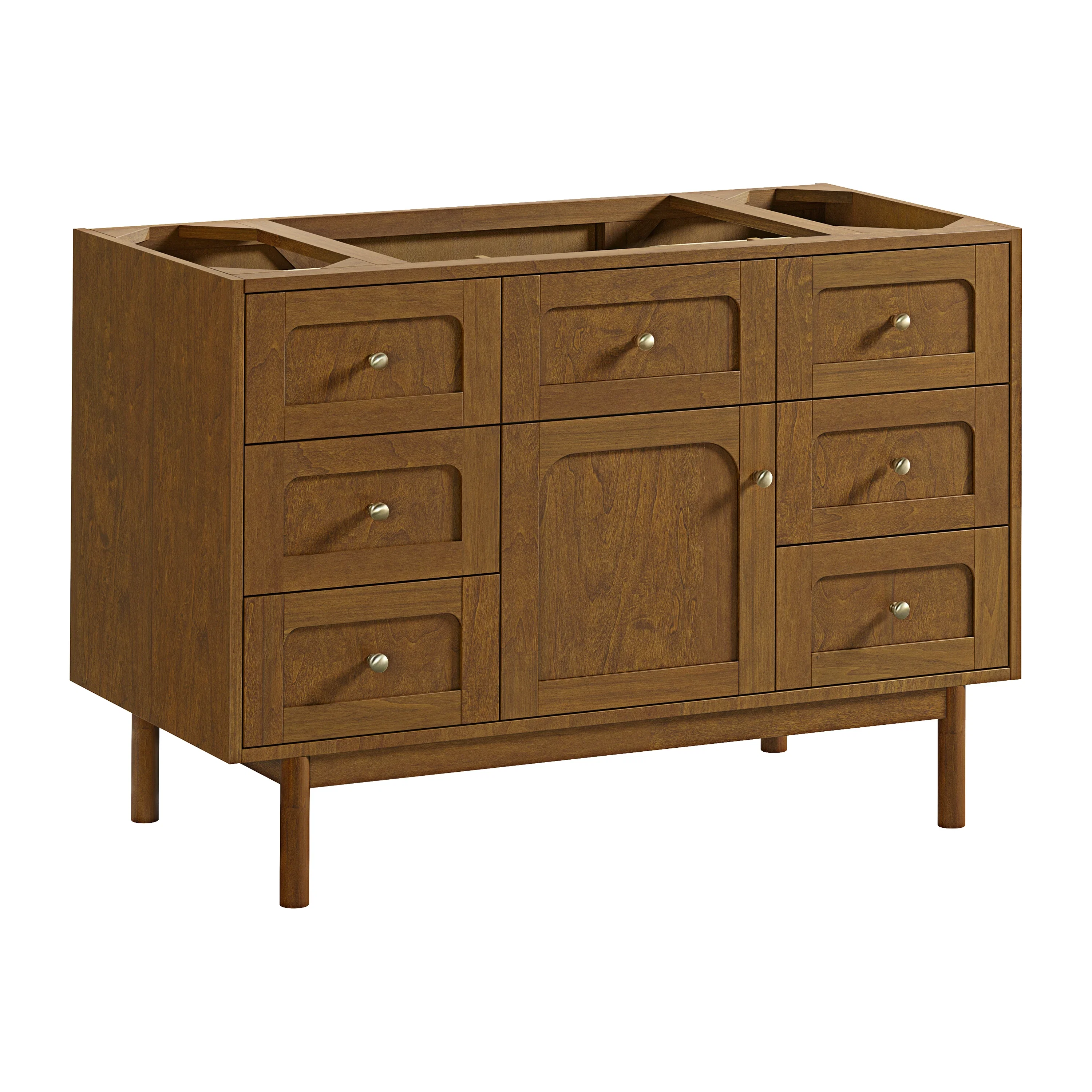
Forty-eight inches of honey oak. Floated, the warmth reads lighter. On legs, it reads like furniture. This is the collection where we would let the rest of the bathroom decide rather than the trend.
21. Laurent 72" Double Vanity Cabinet, Light Natural Oak
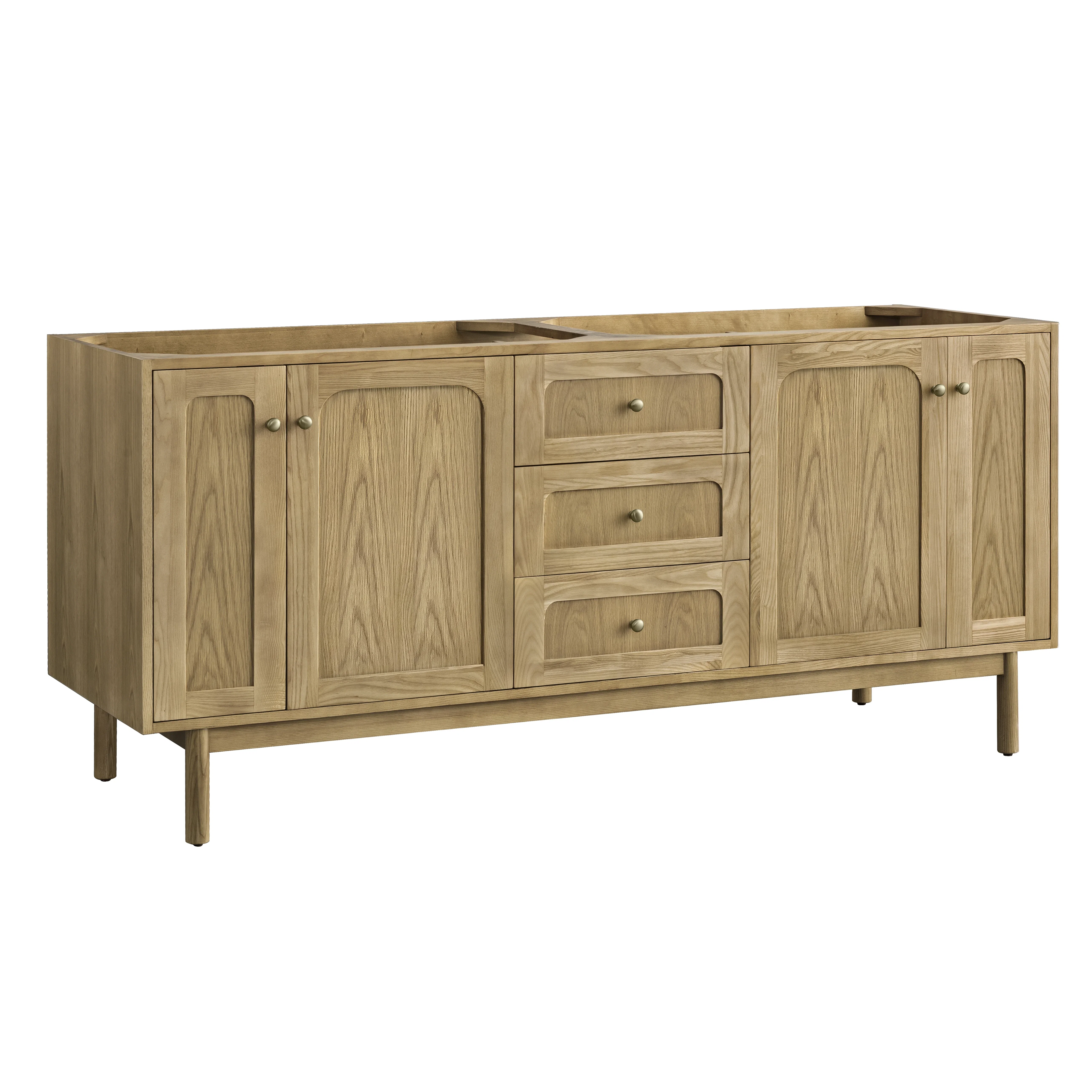
Light Natural Oak is the paler of Laurent's two finishes and the better choice at six feet, because a large expanse of warm oak can tip a room from warm into orange. Floated at this width it is one of the calmer pieces here.
22. Chianti 20" Single Vanity, Glossy White
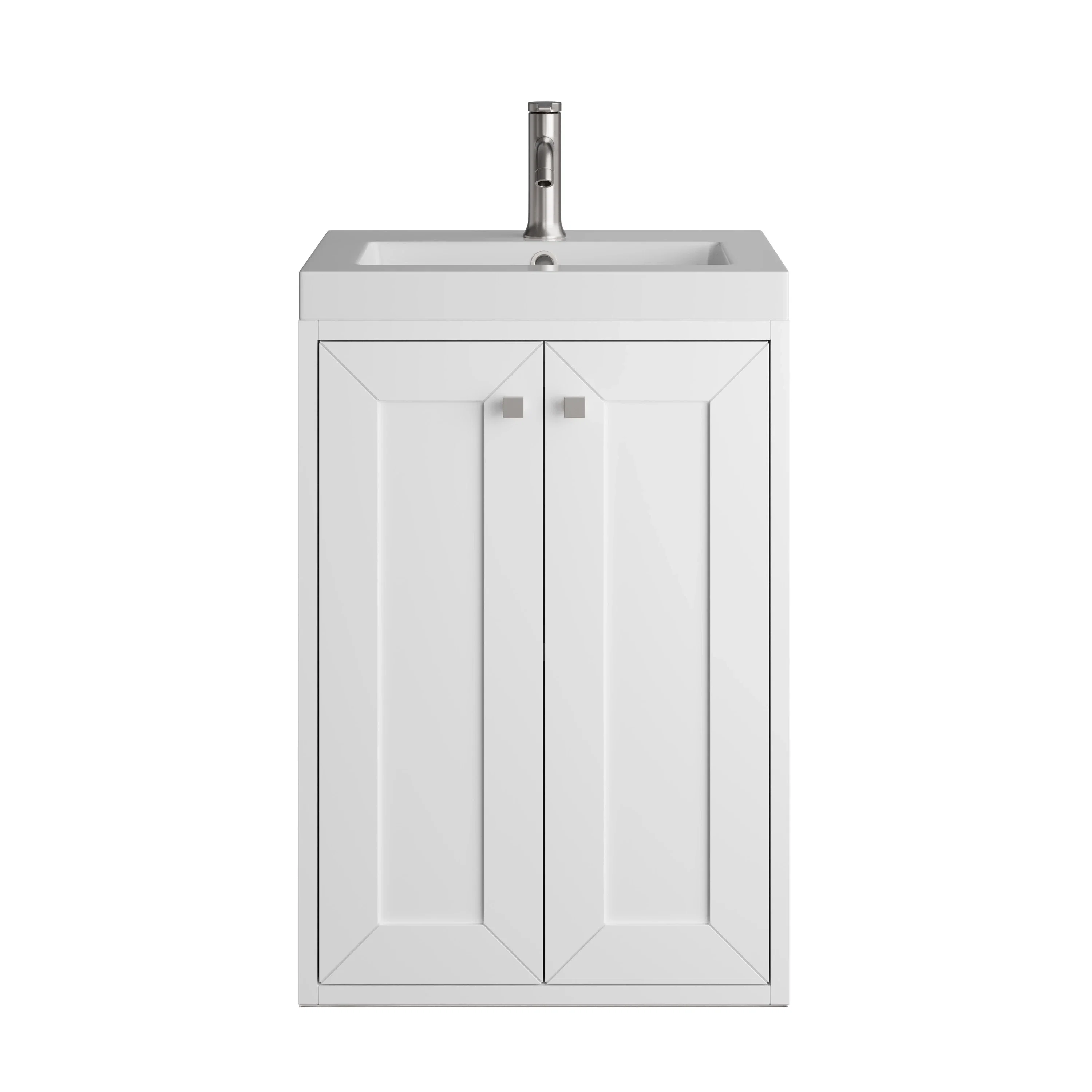
Twenty inches is powder-room territory, and floating it is the single best thing you can do in a bathroom that tight. The cabinet gives you a working sink and somewhere to set one thing down. The visible floor gives you the illusion of a room. Plan on a single-hole faucet.
23. Chianti 24" Single Vanity, Glossy White
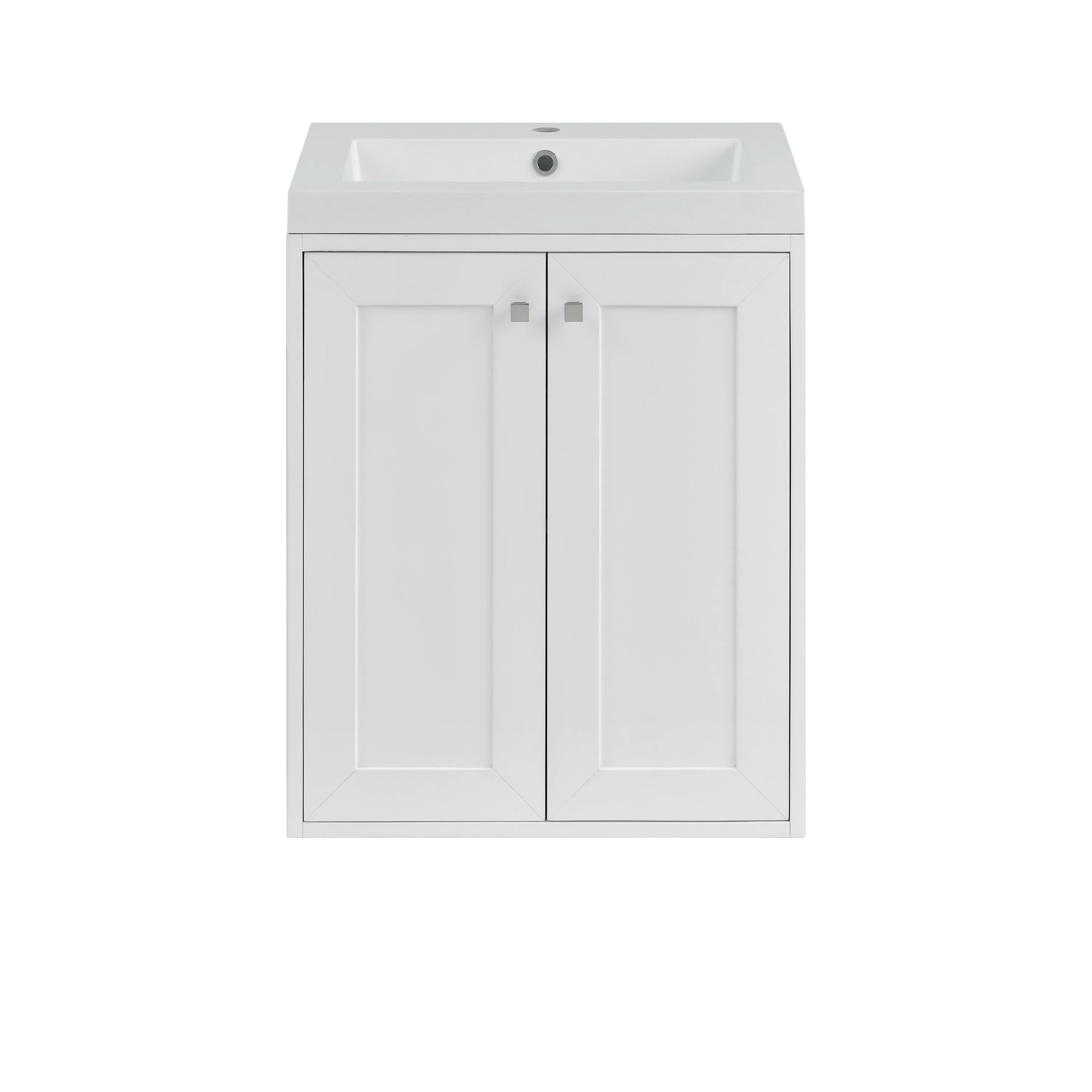
Four inches more than the 20, and in a small powder room those four inches are all usable counter. Still small enough that floating it is clearly the right call.
24. Chianti 24" Single Vanity, Walnut Whisper
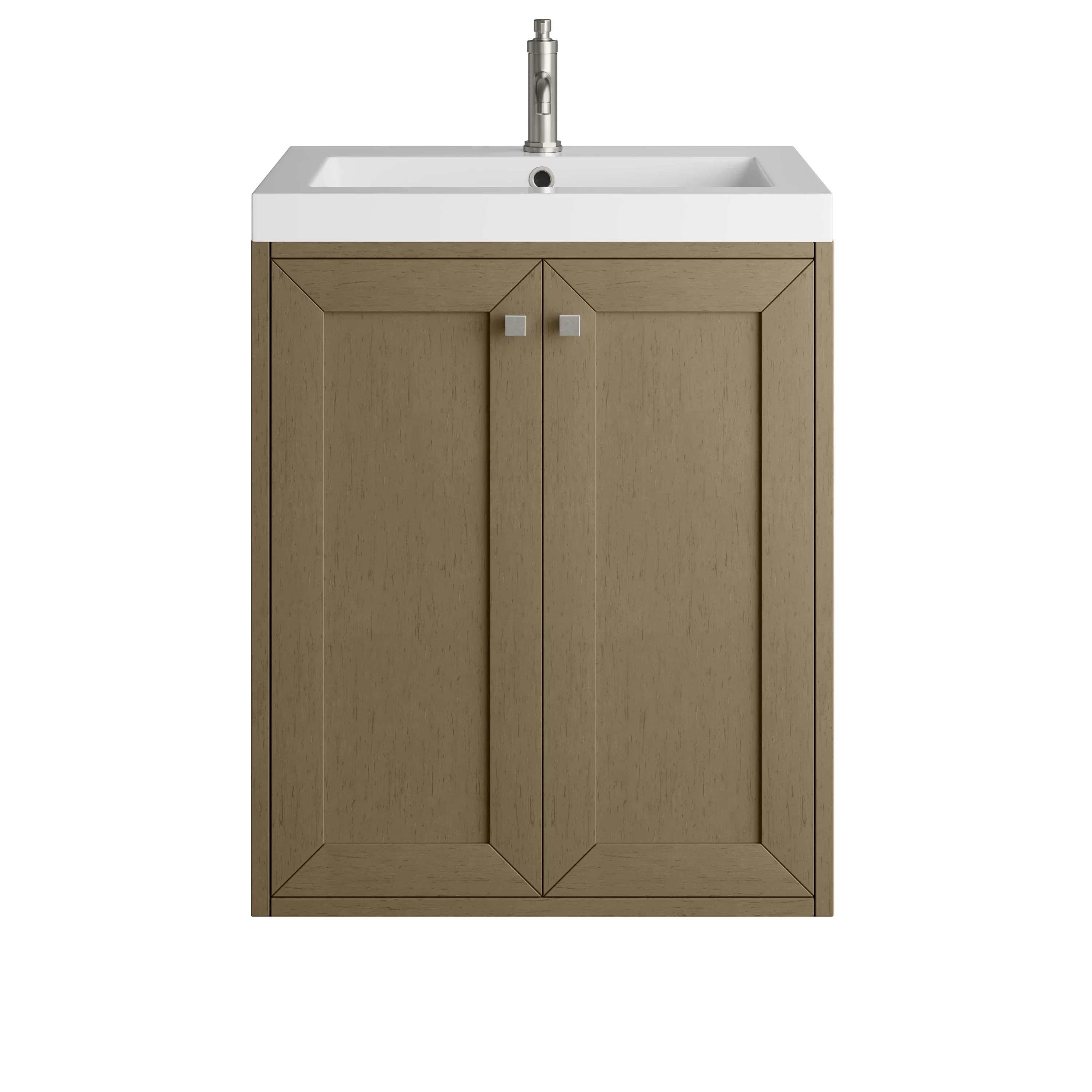
The same 24-inch body in wood rather than white. In a windowless powder room the white version will feel larger, but the walnut will feel finished, and a powder room is the one bathroom you can decorate rather than optimize.
25. Athens 30" Single Vanity Cabinet, Glossy White
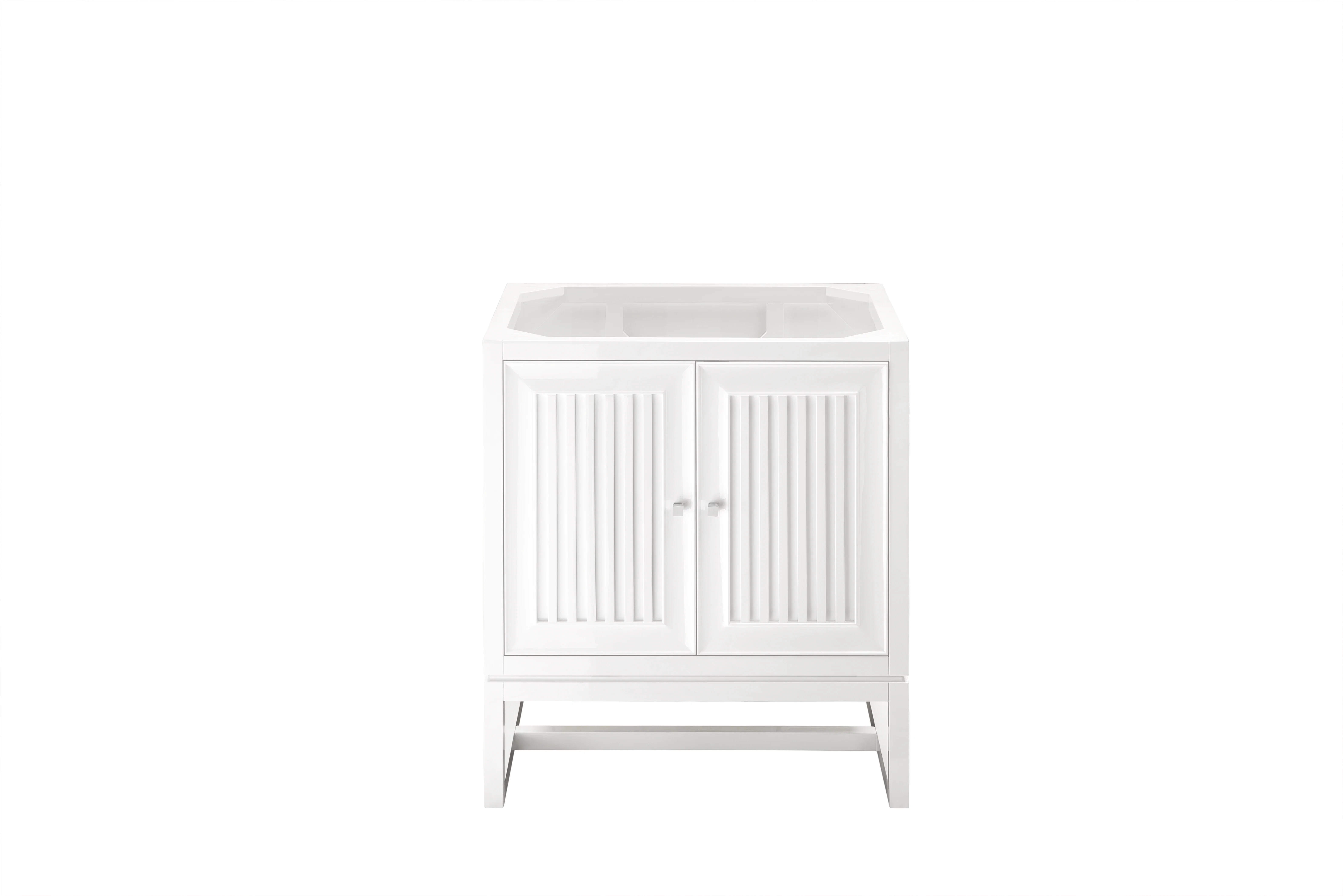
Athens is the plainest glossy white we carry, with the least door detail, so it disappears most completely into a white room. Floated in a small bathroom, that near-invisibility is the goal.
26. Athens 48" Single Vanity Cabinet, Glossy White
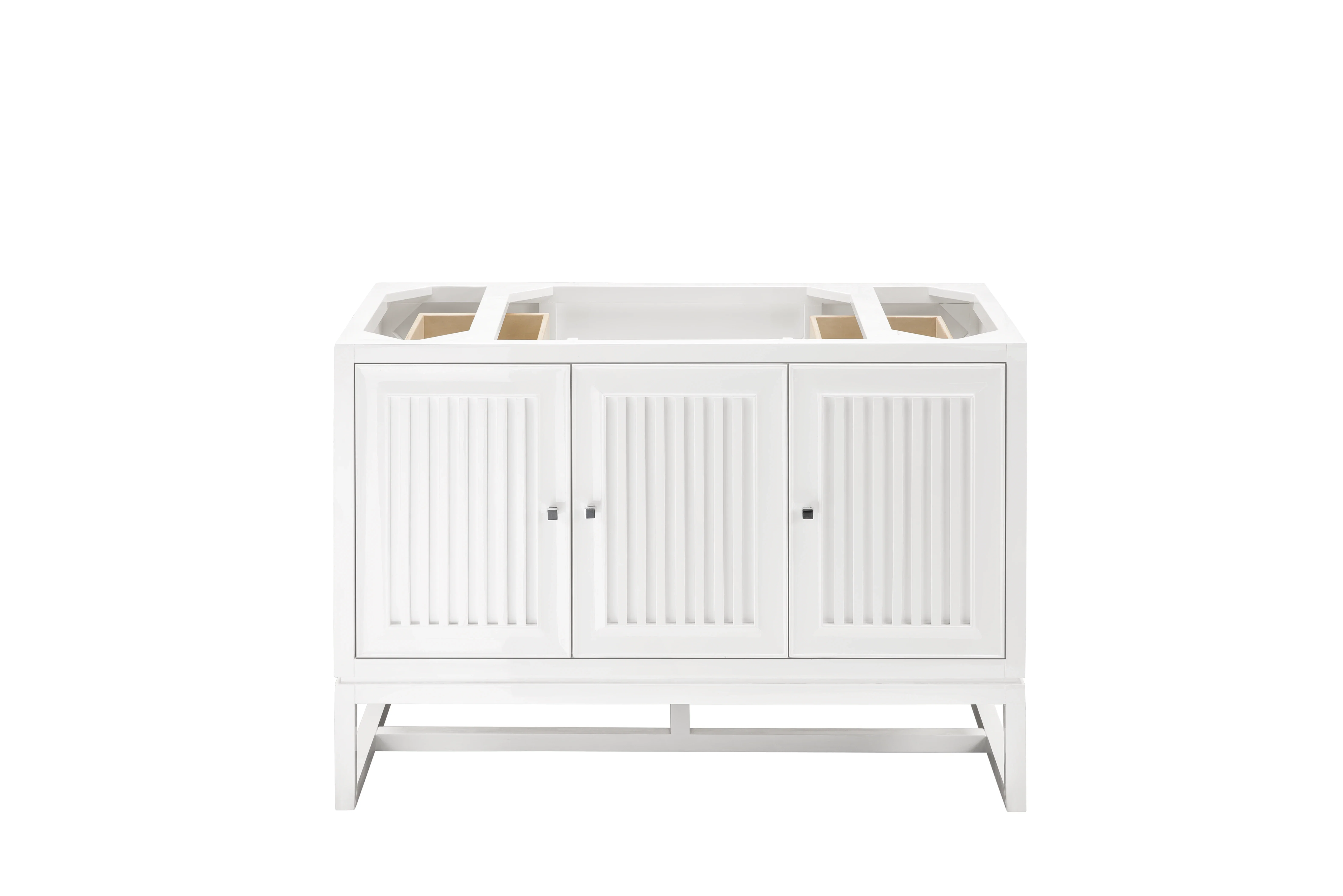
Glossy white at 48 inches, floated, is the most reliably space-enlarging combination in this entire list. Nothing here is more likely to make a small bathroom read as a larger one.
27. Athens 72" Double Vanity Cabinet, Glossy White
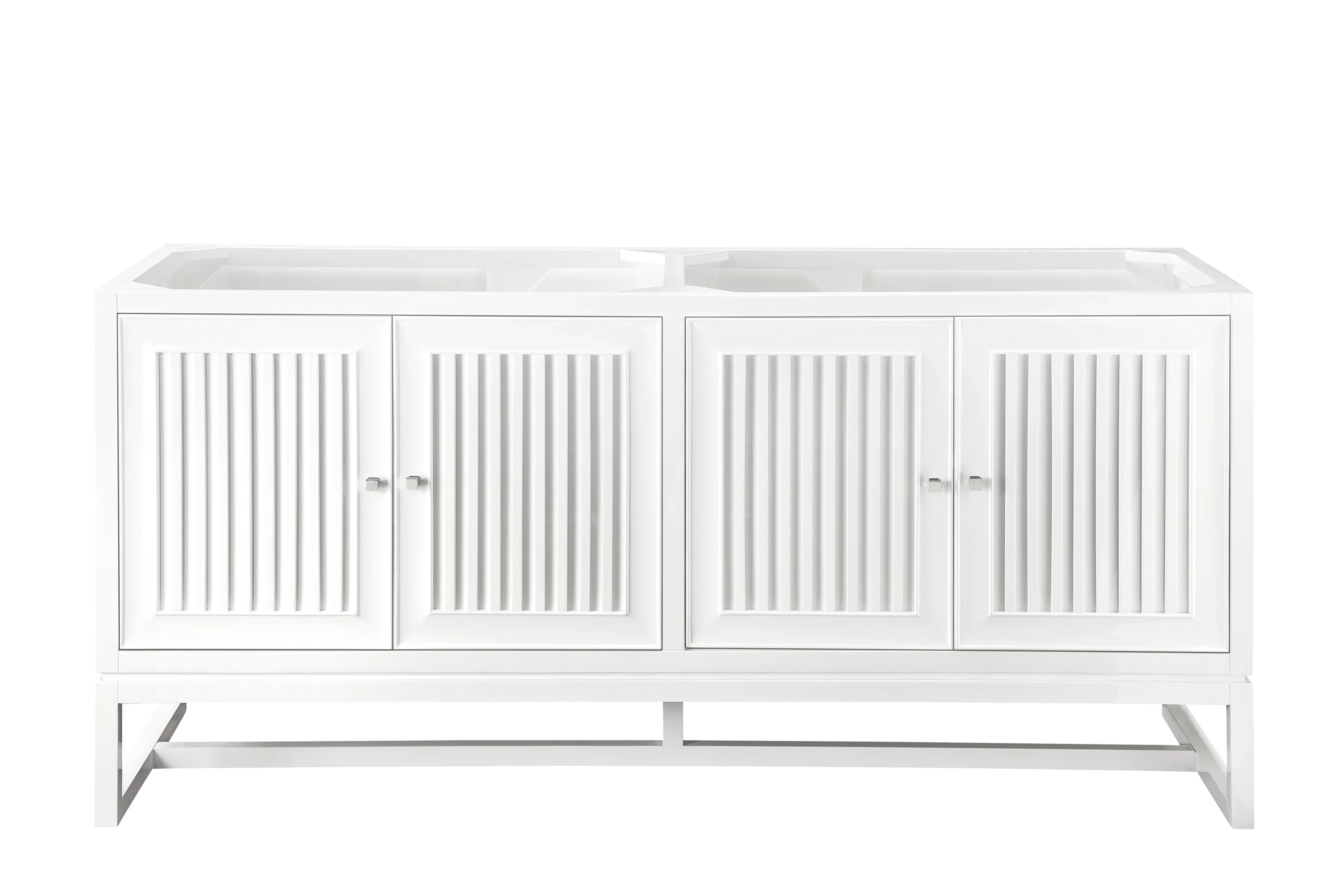
Six feet of unbroken gloss is the most light-reflective option we sell and the most fingerprint-prone. Choose hardware you do not mind touching, because there is a lot of surface around the pulls.
28. Mantova 31.5" Single Vanity Cabinet, Mid-Century Walnut
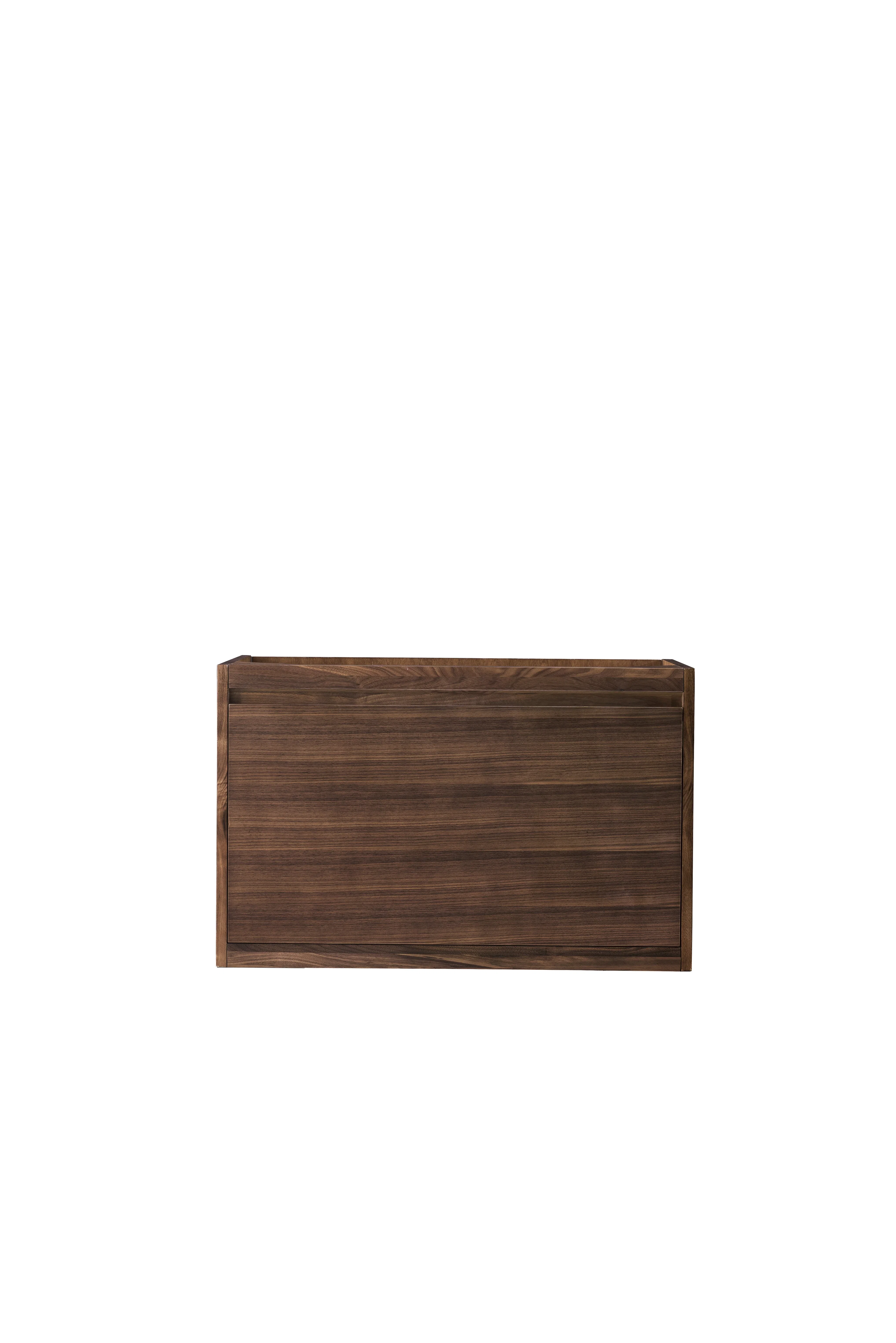
Mantova is the smallest collection we carry, and the 31.5-inch walnut is the whole of it. It also comes with a champagne brass base, which only makes sense floor-mounted. Float it and you get a clean walnut box. Stand it on the brass and you get the piece the designer drew.
What you give up
Honest accounting, because the usual advice skips this part.
Storage. Hung on the wall, a cabinet has no toe-kick cavity and no full-height base, so it holds meaningfully less than the same cabinet standing on the floor. If your bathroom has no linen closet, that gap has to go somewhere.
Install cost. Hanging a loaded cabinet off a wall is not a job for a confident amateur, and if the wall needs blocking added, the labor can approach the cost of the cabinet in a small bathroom. A floor-standing install sits on the floor and forgives a lot.
Cleaning, both ways. You gain an open floor that a mop crosses in one pass, which is the thing people genuinely love. You lose the ability to ignore the underside of your vanity, which collects dust in plain sight.
Flexibility. Once the cleat is mounted and the plumbing is set behind the cabinet, the height is fixed. That is an advantage if you are tall and want the counter at 36 inches instead of the standard 32, and a liability if you ever want to swap in a different piece.
Common questions about floating vanities
Is a floating vanity the same as a wall-mounted or wall-hung vanity?
Yes. All three terms describe a cabinet fixed to the wall with no legs or base touching the floor. "Floating" is the marketing word, "wall-hung" is what most installers say, and "wall-mounted" is what appears on spec sheets. If a listing uses one of them, it means the other two.
Can any vanity be installed floating?
No, and this is the question worth asking before you buy. A cabinet designed only to stand on the floor may have no mounting cleat, an unfinished underside, or a base that is structural rather than decorative. The twenty-eight above are the ones we can confirm either float by design or install both ways. If you are considering something else, ask us first.
How much weight can a floating vanity hold?
The cabinet is rarely the limit; the wall is. Properly blocked into studs, a floating vanity comfortably carries its own weight plus a stone top plus a full basin. Mounted into drywall anchors alone it will eventually fail, and it will fail with water running. This is not a corner to cut.
Does floating cost more to install than floor-mounting?
Usually yes, and occasionally by a lot. If the wall already has blocking where the cleat lands and the plumbing enters at the right height, the difference is modest. If either needs work, you are opening a wall. Since many of the cabinets above install both ways, it is worth getting your installer to look before you commit.
Do floating vanities work in small bathrooms?
That is their best use. Visible floor is what makes a small room read as larger, and the effect is strongest between 20 and 48 inches. The one thing to weigh is the storage you lose, which is felt most acutely in exactly the small bathrooms that benefit most from the look.
Still deciding?
If you are early in the process, how to choose a bathroom vanity runs the decisions in the order that avoids the expensive mistakes, starting with the three measurements people skip. For the full detail on sizes, materials, countertops and installation, see the bathroom vanity buying guide.
Related: small bathroom vanity ideas and modern vanity ideas.
Floating Bathroom Vanities
 Sale
 Sale

 Sale
More Guides You May Like